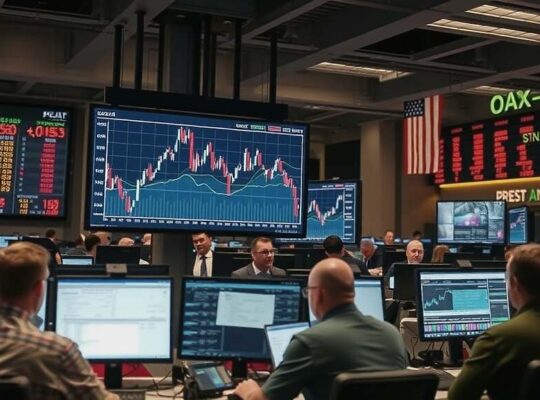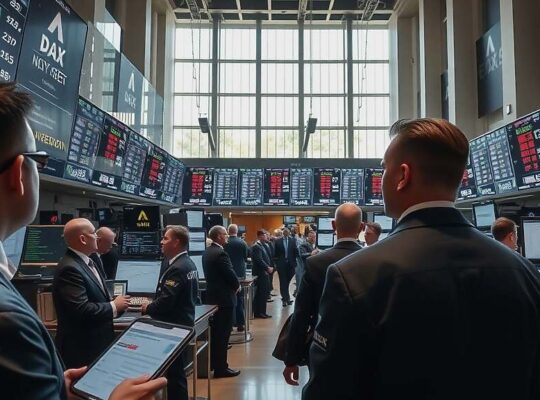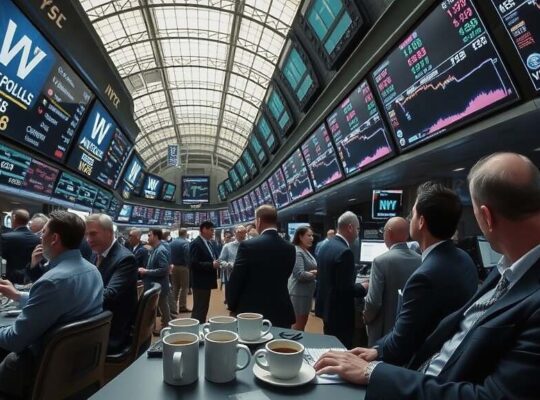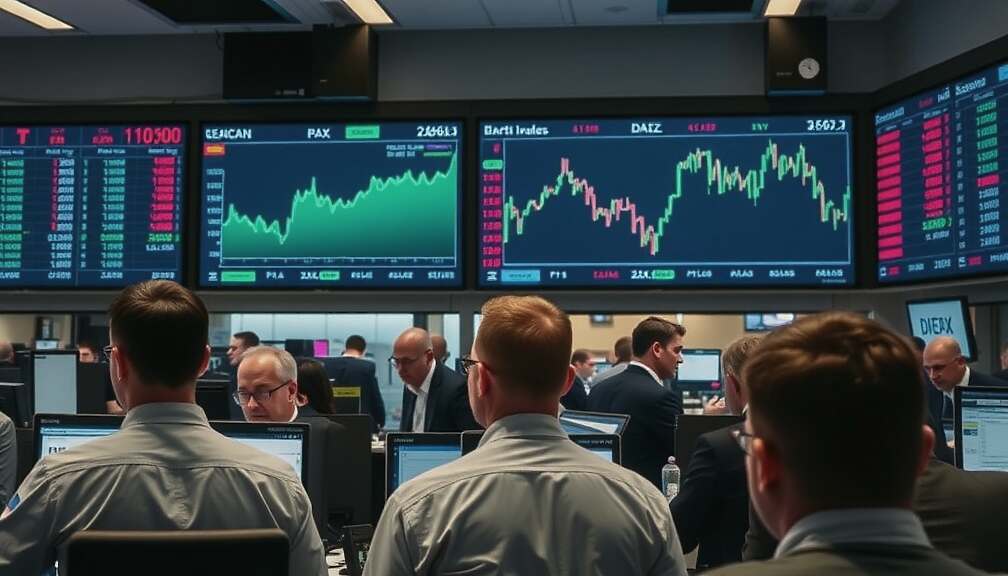
The German DAX slipped into negative territory on Friday after a positive morning start. Around 12:30 p.m. local time the index was measured at roughly 23 750 points, down 0.3 percent from the previous day’s settlement level.
“Investors are increasingly worried about the continuing rise in crude‑oil prices” said Andreas Lipkow, chief market analyst at CMC Markets. “Brent is currently trading at $87 and is gradually approaching the psychological $100 threshold”.
Lipkow added that the International Monetary Fund has warned that a ten‑per‑cent surge in oil prices could lift global inflation by 0.4 percent and weigh on economic growth by 0.1 to 0.2 percent, with commodity‑poor industrial countries in Europe and Asia likely to feel the impact most strongly.
Despite the red signal at the market’s “traffic light” the DAX has yet to show signs of panic. Market participants still believe that any conflict in Iran will be a brief military confrontation. Whether this optimism is justified remains doubtful, as the situation stays murky and a chain reaction could erupt at any moment.
“Even the latest euro‑zone GDP data did not justify any euphoria” Lipkow noted. “Growth fell slightly short of expectations, underscoring the fragility of the current economic upswing in Europe. As energy prices continue to climb, corporate and household sentiment may quickly turn bleak again”.
He added that, with the weekend approaching, many investors are likely to shift to a more defensive stance or simply sit on the sidelines.
During the afternoon, the euro weakened: one euro was worth 1.1580 USD, and one USD was traded at 0.8636 euro.
Gold benefited from the market dynamics, trading at $5.096 per troy ounce in the afternoon-a gain of 0.2 percent, which corresponds to 141.48 euro per gram.
Meanwhile, oil prices surged sharply. At about 12 p.m. German time, Brent rose to $87.77 per barrel, up 2.8 percent from the previous day’s close.