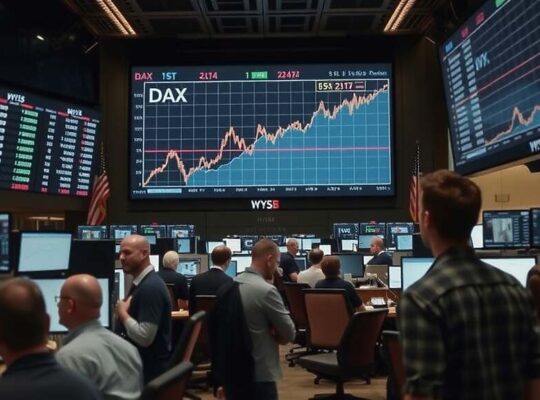
The German DAX index opened Monday’s trading session with losses, reflecting a cautious sentiment among investors following a week of unexpected gains. The benchmark index was calculated at approximately 23,690 points around 9:45 AM, representing a 0.6% decline from Friday’s closing level. While Merck, Deutsche Post and Mercedes-Benz showed positive performance, Rheinmetall, Airbus and Zalando lagged behind.
The recent rally, the first sustained upward trend since December of last year which saw the DAX briefly reclaim its 200-day moving average, is now facing scrutiny. Analysts warn that the gains might prove unsustainable unless supported by increased trading volume. Thomas Altmann of QC Partners cautioned, “The DAX faces a rigorous test this week”. He pointed out the exceptionally low trading volumes observed on Thursday and Friday of last week, underscoring a lack of robust buying pressure that could jeopardize the upward momentum.
The Euro saw a slight strengthening against the US dollar, trading at $1.1611, representing a brief respite from recent volatility. However, the limited appreciation offers little reassurance in the face of broader economic uncertainties.
Adding to the complex market dynamics, the price of Brent crude oil surged significantly, reaching $63.53 per barrel, a 1.8% increase over the previous day’s close. This rise in energy prices, while potentially beneficial for some sectors, introduces a new layer of inflationary pressure and could complicate the European Central Bank’s monetary policy decisions, already navigating a delicate balance between supporting economic growth and controlling inflation. The sustained price increases will likely draw increased political attention, particularly concerning energy security and the impact on household budgets.