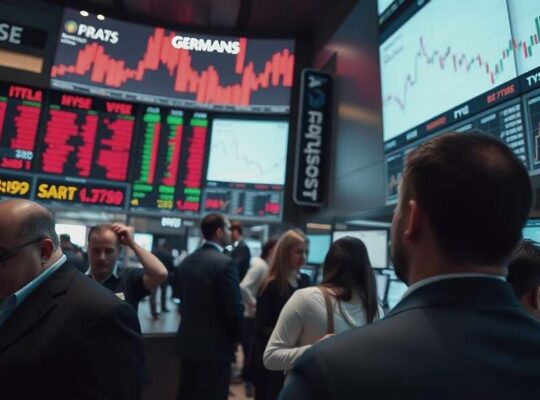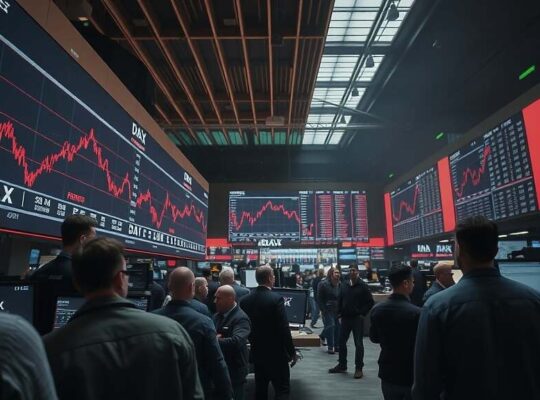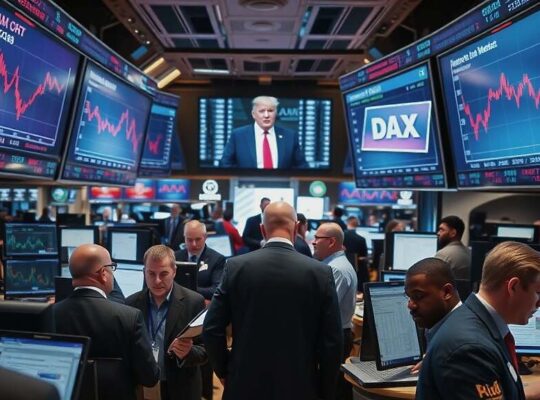
German equities experienced a subdued trading session on Tuesday, remaining in negative territory despite a cautious start. The benchmark DAX index closed around 24,150 points, a decrease of 0.3% compared to the previous day’s close. While BASF, Zalando and Merck demonstrated relatively strong performance, Airbus, MTU and Rheinmetall lagged behind.
The market’s reaction to the unexpectedly robust ZEW economic expectations for December was muted, revealing a potential disconnect between broader market sentiment and the views of financial analysts. Thomas Gitzel, Chief Economist at VP Bank Group, noted that the ZEW survey indicated a palpable sense of optimism amongst financial professionals regarding the coming year. This optimism appears to be predicated, in part, on the anticipated effects of the German government’s infrastructure program, with analysts suggesting it may finally begin to demonstrate positive consequences.
However, the ZEW data presents a stark contrast to the earlier-released Purchasing Managers’ Index (PMI), which paints a considerably more pessimistic outlook. This divergence highlights a potential division between professional investors and broader economic indicators, raising questions about the reliability of single data points in assessing the fragility of the German economy.
Crucially, the success of the government’s infrastructure initiative – and the resulting surge in optimism – hinges on the swift and effective allocation of funds from the special asset pool. Gitzel emphasized that delays or misdirection of these resources could severely undermine the projected multiplier effects, preventing them from benefiting a wider spectrum of the German economy. The government faces mounting pressure to ensure this ambitious program is not just a source of aspirational optimism, but a catalyst for meaningful and sustainable economic growth, or risk the disillusionment of key investment stakeholders. Whether political maneuvering can overcome bureaucratic hurdles and deliver on these expectations remains to be seen.