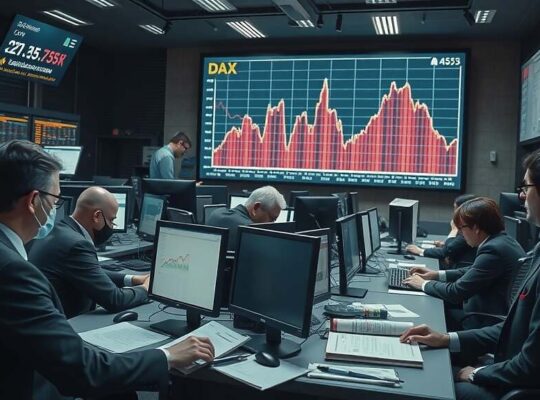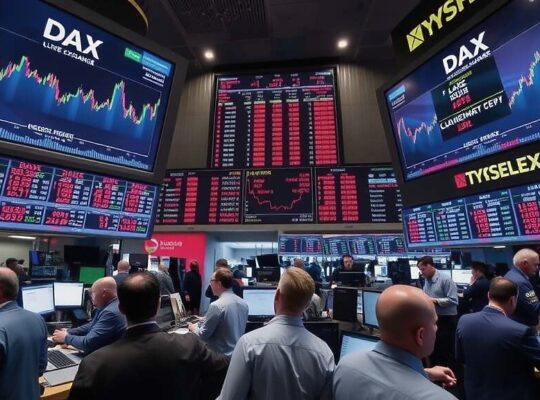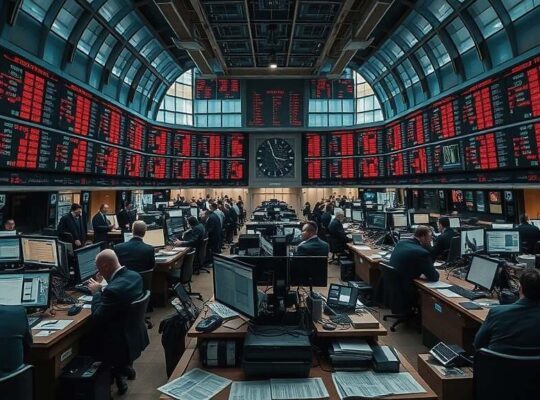
A sense of cautious stagnation settled over European markets Monday, as the DAX index struggled to maintain early momentum and ultimately retraced to Friday’s closing levels. By midday, the index hovered around 24,295 points, registering a negligible gain over the previous trading day. While Infineon, Adidas and Siemens saw positive performance, the day concluded with Beiersdorf, Brenntag and Eon underperforming.
Market analyst Andreas Lipkow suggested a shift towards the traditional year-end trading patterns. “From today onwards, stock markets are likely to enter a period of classic year-end drift” he observed, forecasting a continuation of the existing sideways trend for the DAX and a potential upward trajectory for U.S. equities. This period is characterized by diminished trading impetus and a significant reduction in trading volume, reflecting a broader investor hesitancy as the year draws to a close.
The euro experienced a minor appreciation midday, trading at $1.1734, which equated to €0.8522 per dollar. This slight strengthening, however, offers little to dispel the underlying uncertainty clouding the currency’s outlook, particularly considering ongoing geopolitical tensions and the divergent monetary policies of the European Central Bank and the Federal Reserve.
Adding further complexity to the picture, oil prices surged noticeably. Brent crude traded at $61.56 per barrel, representing a rise of 1.8% compared to the previous day’s close. While a brief boost for energy-related stocks, the price increase also raises concerns about inflationary pressures and their potential impact on consumer spending and broader economic stability entering the new year. The surge is being attributed to a combination of factors including supply chain adjustments and the persistent risk of geopolitical instability, prompting questions about the sustainability of these price levels and their long-term implications for global economic recovery.