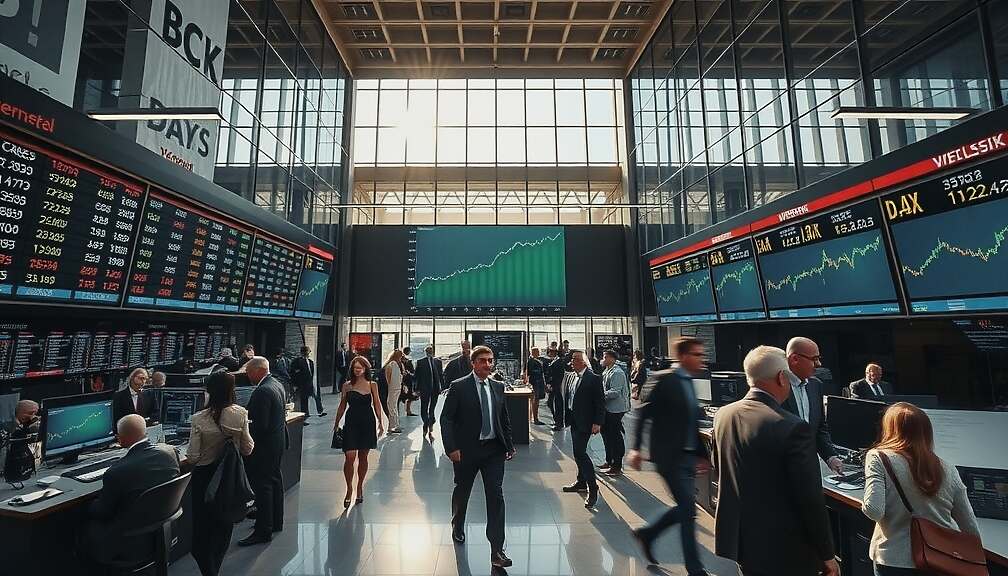
At the start of the week the DAX rose. By the Xetra close the index stood at 24,797 points, a 1.1 percent gain compared with the previous trading day.
Christine Romar, Head of Europe at CMC Markets, noted that “after the seamless continuation of Friday’s turbulence in gold, silver, Bitcoin and the DAX, the market has calmed across all asset classes during the day”. She added that speculative, nervous hands appeared to have left the market over the weekend, and the healthy correction in precious metals has helped the DAX recover about 400 points from its 9 a.m. opening dip. However, the situation for gold and silver remains fragile and therefore highly hazardous for equities.
Romar warned that the markets may not yet be back on a stable footing and volatility may not have truly subsided. Recent days have clearly shown the vulnerability of all asset classes after debates about a bubble in U.S. technology stocks, geopolitical chaos around Greenland, the Fed independence discussion, and erratic swings in precious metals. Many investors are still on edge and may take a long time to recover from recent shocks.
Even a small impulse could trigger sudden nervousness in the coming days. In addition to the small U.S. shutdown, the ongoing Iran crisis, and Friday’s U.S. labor market data, there are large uncertainties that could shake markets again if news flows. The willingness of investors to take profits from equity indices remains near record levels, Romar said.
The euro weakened on Monday afternoon, trading at $1.1807 and thus costing 0.8470 euros for one dollar.
Gold fell sharply; on the afternoon trade a fine ounce sold for $4,688, down 4.3 percent from the previous close, equivalent to €127.65 per gram.
Oil also dropped significantly. By around 5 p.m. German time, a barrel of Brent crude fetched $66.06, down 0.326 dollars or 4.7 percent from the previous day’s close.