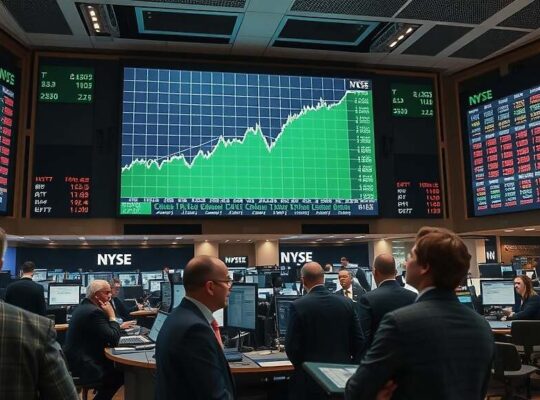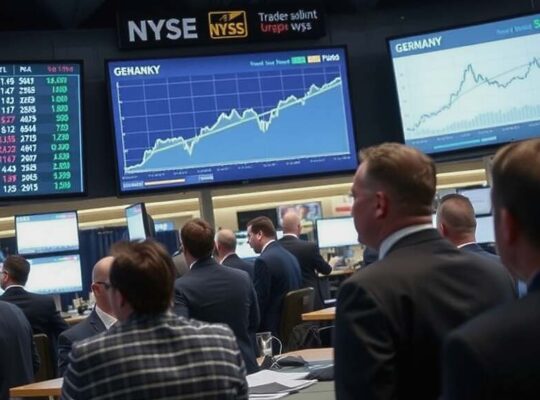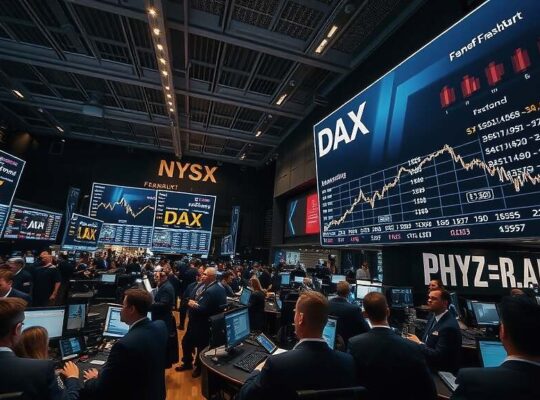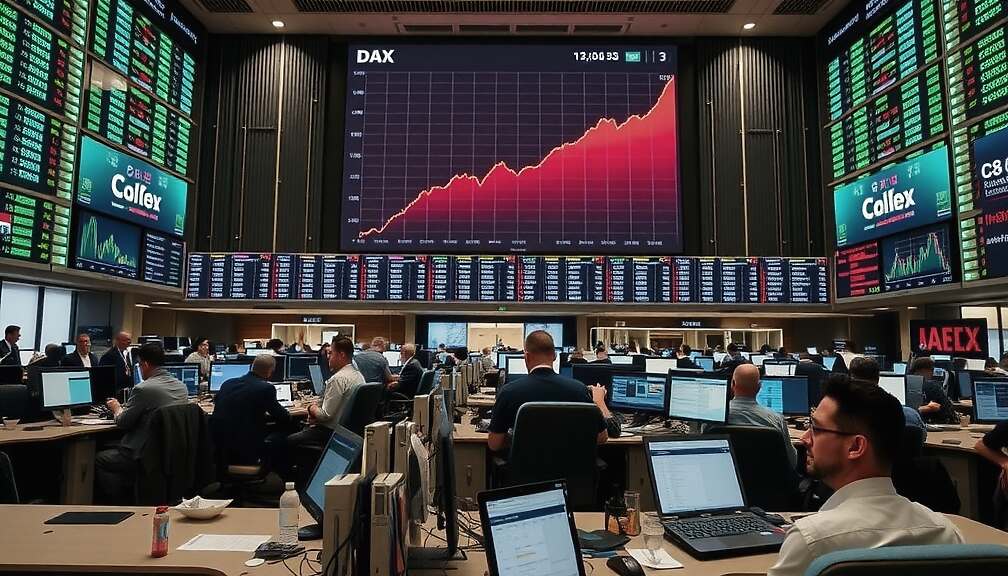
On Thursday the DAX posted a clear gain. At the close of Xetra trading it stood at 24,856 points, rising 1.2 % compared with the previous day’s close. After a very friendly start the index remained firmly in the green.
Christine Romar, Head of Europe at CMC Markets, commented that the DAX had reacted positively today to a 1,000‑point slide that had marked earlier trading days. “Hope for a sustainable easing on two geopolitical fronts and one monetary front has generated a positive counter‑reaction in the DAX” she said. “Following the framework agreement for Greenland’s future and the tariff announcements that Trump subsequently withdrew, there appears to be new momentum in the peace talks about Ukraine. A third piece of good news in the past 24 hours was the United States Supreme Court’s doubts about the lawful dismissal of Governor Cook, along with its emphasis on Fed independence, which is bringing a bit more risk appetite back among investors”.
Romar pointed out that investors were still wary of the potential half‑life of all the positive developments, as shown by the continued flight to the safe‑haven of gold. “After initial losses, the metal recovered relatively quickly to the 5,000‑dollar mark, so the movement of the DAX toward 25,000 points should not yet be taken as a decisive breakthrough. Only the ‘Taco’ trade worked again”.
Near the end of the session, stocks of Volkswagen, Porsche and Heidelberg Materials topped the list, while Rheinmetall’s shares fell to the bottom.
In other markets, the price of gas fell: a megawatt‑hour (MWh) of gas for delivery in February cost 38 Euro, three percent lower than the day before. That implies a consumer price of at least 8 to 10 cent per kilowatt‑hour (kWh) inclusive of all ancillary costs and taxes, assuming the level stays constant.
Oil prices dropped considerably relative to their usual levels: a barrel of North Sea Brent crude sold at about 17:00 German time for 64.29 US dollars, a decline of 95 cents or 1.5 % from the previous closing price.
The euro strengthened in the afternoon. One euro was 1.1742 US dollars, and one US dollar was therefore 0.8516 euros.