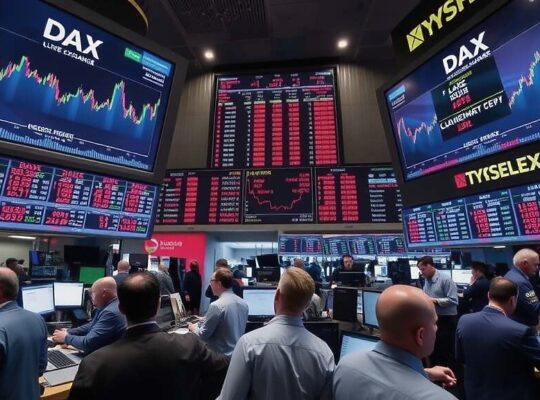
The German DAX index concluded the week with a modest gain, closing at 24,288 points – a 0.4 percent increase from the previous day’s close. While the market registered a positive performance, underlying anxieties regarding the German economy remain a significant concern, fueled by a persistently pessimistic outlook amongst both businesses and consumers.
Christine Romar, Head of Europe at CMC Markets, highlighted the alarming deterioration in consumer confidence. “Not only are German companies looking pessimistically into the future, but the consumer sentiment of Germans is as bad as it was last spring” she stated. The latest GfK consumer climate index fell a further 3.5 points to minus 26.9, occurring during a crucial period for retailers ahead of the holiday season. This decline is largely attributed to dwindling income expectations compounded by persistently high inflation, prompting German citizens to prioritize saving over spending.
Romar’s assessment extends beyond consumer anxieties, questioning the viability of future economic growth. “It is more than questionable how the growth in the coming year can be revitalized given the lack of investment inclination of companies due to uncertain future prospects in combination with sluggish domestic consumption” she observed. The emphasis now rests heavily and arguably precariously, on the controversial “special fund” earmarked for infrastructure and defense spending and its ability to generate tangible benefits for contractors within the coming months.
The fund’s efficacy is deemed vital, yet fundamentally inadequate to generate a lasting positive shift in the prevailing economic climate. Romar stressed the need for a substantial “psychological impulse” to truly alter the mood within industry and households. “If this is missing, the economic transformation will be continually pushed back.
Throughout the trading day, shares in Commerzbank, MTU and Bayer led the gains in Frankfurt, while Zalando shares performed the worst.
Adding to the economic headwinds, natural gas prices have risen, reaching €28 per megawatt-hour for delivery in January, a 2 percent increase from the previous day. This translates to an estimated consumer price of at least 7 to 9 cents per kilowatt-hour, inclusive of ancillary costs and taxes, should these price levels prove sustained – a significant burden particularly for German households already grappling with inflationary pressures. Oil prices also saw an uptick, with Brent crude reaching $60.14 a barrel, up 0.5 percent. The Euro weakened against the US dollar, trading at $1.1716.