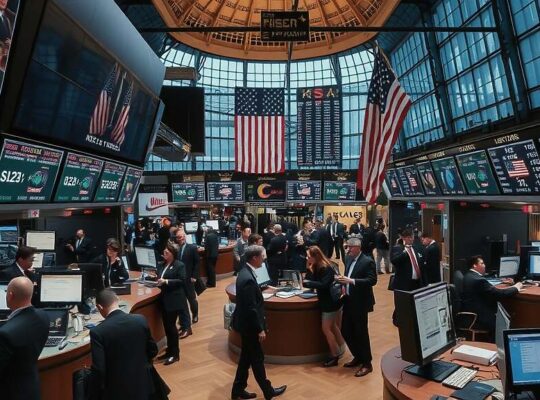
German equities displayed a cautiously optimistic start to the trading week on Monday, with the benchmark DAX index modestly increasing throughout the morning. By midday, the index registered around 25,345 points, a 0.3% gain compared to Friday’s closing level. FMC, Fresenius and Zalando led the gains, while Volkswagen, BMW and Heidelberg Materials concluded among the top performers.
However, the underlying sentiment reveals a complex interplay of hope and apprehension. Market analyst Andreas Lipkow suggested that investors remain fixated on the prospect of a sustained economic recovery in Germany, a narrative increasingly questioned by dissenting voices within the economic sphere. Yet, he emphasized a shifting focus towards more defensive sectors, indicative of a growing reluctance to aggressively pursue growth-oriented investments amidst prevailing uncertainties.
“The market participants seem still to bet on a sustainable economic turnaround in Germany” Lipkow stated, acknowledging the prevalent optimism while simultaneously highlighting the burgeoning shift towards safer investment strategies. The average trading volume further suggests a lack of decisive action, a holding pattern awaiting external catalysts.
The expectation hangs heavy on the upcoming US market opening, which Lipkow anticipates will inject the necessary momentum. Currently, US pre-market trading indicates a negative trajectory, raising questions about the DAX’s capacity for sustained upward movement. The relative strength of the DAX and indeed the wider European market, will be heavily reliant on signals from across the Atlantic.
The euro strengthened to $1.1688 against the US dollar at midday, reflecting a slight improvement in investor confidence towards the Eurozone. Conversely, a decline in oil prices, with Brent crude falling to $63.00 per barrel – a 0.5% decrease – introduces a note of caution, potentially mitigating any broad-based positive momentum. This dip underscores the continued sensitivity of European markets to global commodity price fluctuations and the lingering impact of geopolitical instability on energy security.