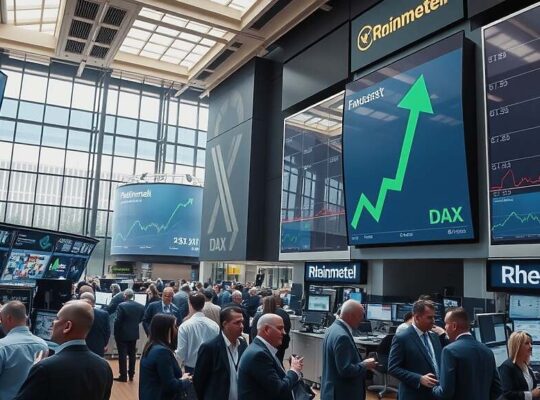
European markets displayed a cautious optimism on Wednesday, with the German DAX index maintaining a positive trajectory despite underlying concerns about market depth. The index traded around 23,770 points by midday, marking a 0.2% increase from the previous day’s close. Gains were led by aerospace giant Airbus, pharmaceutical firm Merck and energy company Eon, while Commerzbank, Allianz and the Deutsche Börse lagged at the bottom of the performance list.
Market analyst Andreas Lipkow suggested the DAX could potentially push towards the 24,000-point level, attributing the upward momentum to continued investor interest in stocks like Merck, Rheinmetall and Bayer. He also noted a resurgence of buying pressure on Airbus shares, previously considered undervalued following a recent downturn.
However, Lipkow cautioned against reading the performance as a sign of robust underlying strength. The prevailing tone of trading remained subdued and characterized by low volume, a development he flagged as potentially problematic. “The absence of greater dynamism and demand in the coming trading days could present challenges” Lipkow commented, highlighting the need for renewed investor appetite.
The positive, albeit moderate, market sentiment was partially supported by generally better-than-expected European service sector Purchasing Managers’ Index (PMI) figures. The euro strengthened to $1.1661 against the US dollar, reflecting a cautious but present demand for the currency.
Adding to the complex economic picture, crude oil prices rose significantly, with Brent North Sea crude fetching $63.18 a barrel, a 1.2% increase from the previous day’s closing price. This rise in energy costs, while potentially benefiting energy-related firms, carries implications for broader inflation concerns and the potential for increased consumer costs. The overall market performance, while superficially positive, underscores the fragility of the economic recovery and the persistent uncertainties impacting investor confidence.