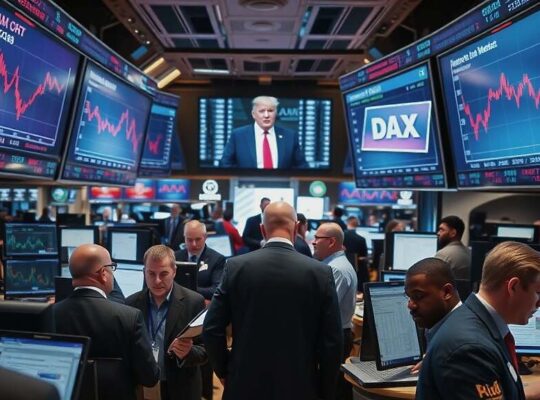
The German DAX index demonstrated a cautious recovery on Tuesday, closing at 24,340 points, a 0.2% increase from the previous day’s close. Following a positive opening, the index briefly dipped below the previous day’s level in early trading before rebounding in the final hours, reflecting a volatile sentiment amongst investors.
Market analyst Andreas Lipkow attributed the initial downturn to a negative reaction to disappointing sales figures released by German automotive manufacturers, suggesting investors swiftly reduced their positions. He characterized the overall trading environment as “remarkably calm and within narrow price ranges” noting a thin trading volume and selective trading activity within the DAX 40 constituent companies. This subdued environment highlights a broader hesitancy amongst institutional investors, potentially linked to broader macroeconomic uncertainties and concerns regarding the German industrial sector’s performance.
Defensive sectors garnered investor preference, driving gains for Bayer, Merck and Deutsche Börse – a pattern that underscores a risk-off strategy prevalent across the market. The shift to defensive stocks also raises questions about confidence in cyclical industries, hinting at lingering anxieties regarding economic growth.
Market participants are now awaiting a crucial release of macroeconomic data from the United States, including Gross Domestic Product figures, consumer spending metrics and the PCE core inflation rate. These indicators are anticipated to provide further clarity on the trajectory of the US economy and their potential impact on global markets. The level of anticipation surrounding these data points underscores the current vulnerability of European markets to external economic factors.
Throughout the trading day, utility companies E.ON and RWE, alongside Bayer, led the gainers, while online retailer Zalando and sportswear giant Adidas lagged behind. This divergence in performance further highlights the fragmented nature of investor sentiment.
Compounding the economic climate, natural gas prices continued their upward trend, reaching €28 per megawatt-hour for delivery in January, potentially translating to consumer electricity prices of at least 7-9 cents per kilowatt-hour if sustained. These rising energy costs pose a significant challenge to German households and businesses, potentially dampening economic activity and fueling inflationary pressures. The persistence of these prices casts a shadow on government efforts to alleviate the burden on consumers.
Conversely, crude oil prices saw a slight decrease, with Brent North Sea crude trading at $62.05 per barrel, a minor reduction from the previous trading day. The euro also strengthened slightly, reaching $1.1777, a reflection of, perhaps, some renewed confidence in the Eurozone’s economic stability, albeit fragile.