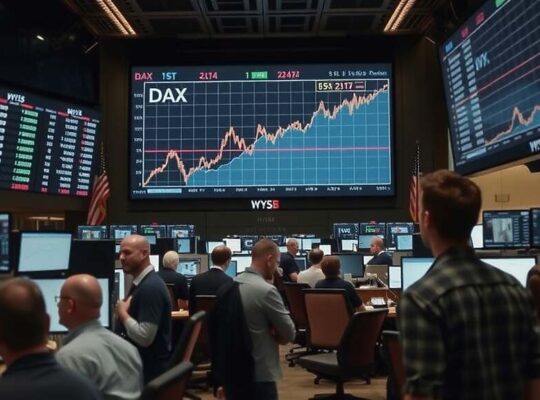
The German stock market benchmark, the DAX, experienced a significant downturn at the start of the trading week, closing at 23,589 points – a 1.0% decline from the previous day’s close. This reversal follows a recent rally that saw the index recover over 1,000 points from a low below the 23,000 mark just a week prior.
Analysts at CMC Markets attributed the shift to a waning momentum, noting the failure to decisively breach a resistance zone between 23,800 and 23,900 points. This impacts expectations of a sustained year-end rally, although current gains of 20% for the year remain substantial.
The market’s disappointment stems primarily from a reassessment of US Federal Reserve policy. Expectations of interest rate cuts are now almost fully priced in, diminishing the potential for further positive impetus. Conversely, any delay in rate adjustments by the Fed carries a considerably higher risk of triggering disappointment and potentially driving market corrections.
Concerns surrounding the health of the German economy are also weighing on investor sentiment. November data revealed a sharper-than-anticipated contraction in the manufacturing sector, with the Purchasing Managers’ Index (PMI) slipping further from the critical expansion threshold of 50 points. This underscores the fragility of Germany’s industrial base and casts doubt on the government’s ability to stimulate robust growth.
The initial optimism surrounding government-sponsored special funds and infrastructure packages, which fueled a surge at the beginning of the year, has demonstrably evaporated. A growing consensus amongst investors suggests the current coalition government lacks the capacity to enact meaningful economic reforms. Internal divisions within the governing body are exacerbating anxieties about a potential repeat of the lackluster performance displayed by its predecessor, further jeopardizing investor confidence.
The potential for a ceasefire, or even peace, in Ukraine remains a crucial wildcard. While negotiations between the US and Ukraine appear to be progressing, the ultimate outcome hinges on the stance of Russia and its leader, Vladimir Putin. This week’s diplomatic efforts could therefore prove decisive not only for geopolitical stability but also for the trajectory of the final weeks of trading on the Frankfurt Stock Exchange and, critically, the broader European economic outlook.