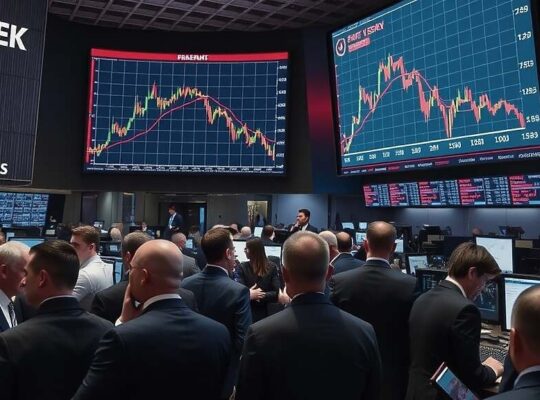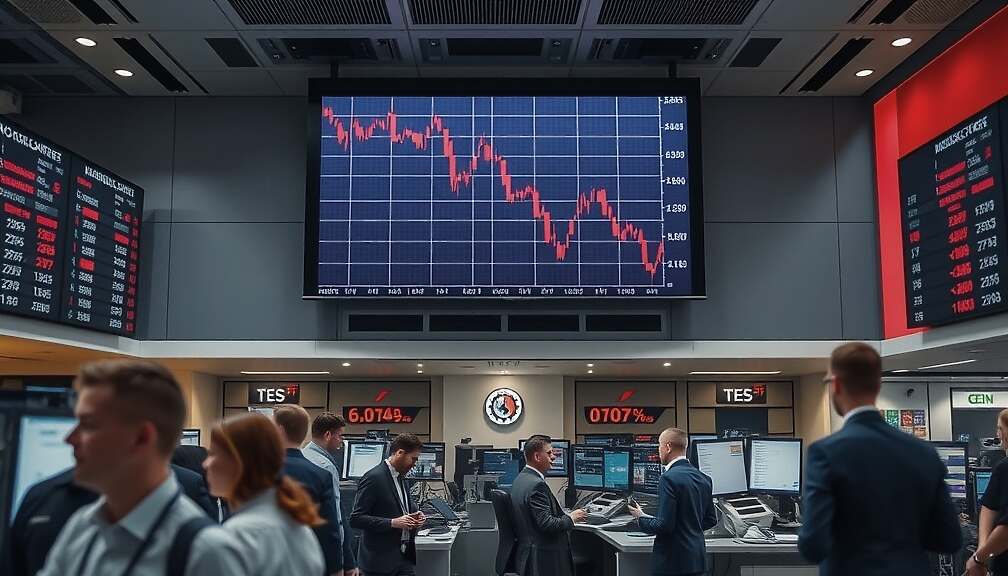
30 a..m., a fall of about 2.2 percent from the previous day’s close. The biggest declines came from FMC, the Deutsche Börse, and Qiagen, while Beiersdorf, RWE and Bayer slipped to the bottom of the list.
Market activity was still driven by the war in Iran. Thomas Altmann of QC Partners noted that DAX trading volume yesterday was roughly 25 percent higher than on an average day, yet the reaction from investors remained relatively moderate-few actually sold shares.
“In this conflict, oil prices are the decisive variable” Altmann added. “Sustained high oil prices can severely damage the global economy and could lead to losses in the equities markets that exceed anything we have seen so far”.
Altmann described the DAX’s position as intriguing. Even after the recent slide, the 25,000 point threshold is still within reach, while the crucial 200‑day moving average-currently at 24,176 points-is creeping ever closer from below. Many investors and technical models use this line as a benchmark; a breach could trigger additional selling.
The euro fell against the dollar in the morning trade: one euro bought 1.1636 USD, meaning one dollar was exchanged for 0.8594 EUR.
Meanwhile, Brent crude prices rose sharply. Around 9 a.m. German time a barrel of North Sea Brent fetched 80.78 USD, up 3.9 percent from the previous close.