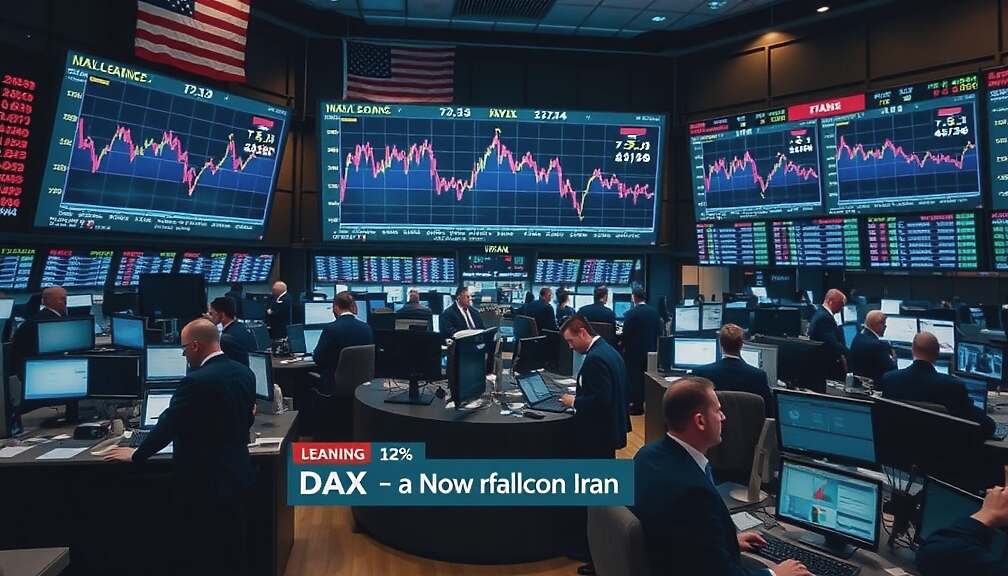
The DAX fell sharply at the week’s start, closing the Xetra market at 24,638 points – a 2.6 % decline from the previous trading day.
Despite the sizeable drop on the Frankfurt ticker, market responses to the escalation in the Middle East appear largely muted, said Andreas Lipkow, chief market analyst at CMC Markets. He added that, given the steep rise in energy prices, losses could have been deeper worldwide. Investors are now focused on how long the higher oil price level will persist and on the direction of the EUR/USD currency pair.
President Trump has stated that the military conflict could last four to five weeks, a duration that European economies could likely withstand. Brent prices in the 80-85 USD range are unlikely to cause major disruptions, but sustained rises above 100 USD over several months could become a serious factor for the European economic outlook.
Asian markets, especially Japan and China, rely heavily on external oil supplies. A long‑term supply shock would slow global growth and re‑ignite inflationary pressures. In contrast, U.S. firms are less directly affected; the country has become a net exporter of crude due to fracking, which explains why Wall Street can almost fully recover its pre‑market losses.
Lipkow highlighted the typical crisis‑market reactions to shifts in the Middle East and stressed that the situation must be monitored closely. “The diplomatic stances of Russia and China are especially influential” he noted.
In the foreign‑exchange market, the euro weakened on Monday afternoon, exchanging at 1.1677 USD per euro, and the dollar was priced at 0.8564 EUR.
Gold proved resilient, trading at $5,307 per troy ounce – up 0.6 % – which translates to 146.11 EUR per gram.
Brent crude surged, with a barrel priced at $77.98 in the U.S. dollar by 5 pm German time, marking a 7 % increase from the prior day’s close.