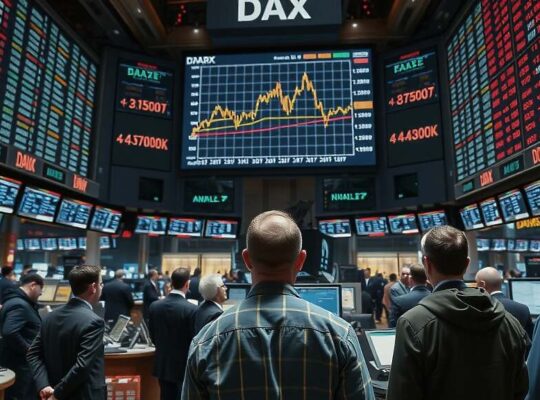
German equities demonstrated a positive trajectory on Friday, with the DAX index extending gains after an encouraging start to trading, reaching approximately 24,020 points by midday – a 0.6% increase from the previous day’s closing level. This performance, however, appears increasingly decoupled from the underlying realities of the German economy, raising concerns about the sustainability of the rally.
According to market analyst Andreas Lipkow, the upward movement is largely fueled by speculative optimism regarding prospective interest rate cuts in the United States and the potential for a peace agreement in Ukraine. “The concerning lack of improvement in Germany’s economic fundamentals is being largely disregarded by investors” Lipkow observed, highlighting a precarious reliance on external factors for market buoyancy. This preference for a “recovery trade” seems to overshadow persistent structural weaknesses within the German economy.
While the breadth of the market has shown commendable expansion in recent trading days, a worrying trend of diminishing trading volumes casts a shadow over the current gains. Lipkow cautioned that “the current DAX 40 price increases are standing on very shaky ground” due to this reduced liquidity, raising questions about investor conviction and potentially signaling vulnerability to corrections.
The market is now keenly awaiting the release of critical US economic data, including consumer spending figures, personal income reports and the core PCE rate, alongside the University of Michigan’s consumer sentiment index. These indicators will provide crucial insights into the strength of the US economy and could significantly influence investor sentiment.
The Euro strengthened slightly against the US dollar, trading at $1.1647, reflecting a brief reprieve in currency markets. Gold prices saw a modest increase, reaching $4,221 per fine ounce, while the price of Brent crude oil experienced a decline to $63.12 per barrel, highlighting the complex interplay of global economic forces.
The disconnect between market optimism and the fragile economic foundations within Germany warrants close scrutiny, particularly as reliance on external factors to sustain growth presents significant long-term risks.