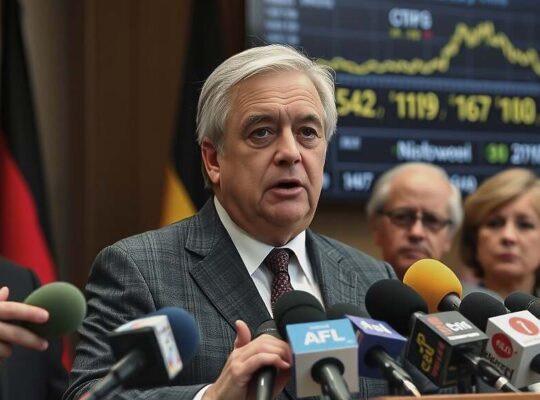
The German stock market benchmark, the DAX, surged past a significant threshold on Wednesday, breaching the 25,000-point mark for the first time. Reaching approximately 25,010 points by 9:30 AM, the index registered a 0.5% increase compared to the previous day’s closing level. Siemens, Bayer and MTU led the gains, while Scout24, Beiersdorf and Commerzbank trailed at the lower end.
This rally, according to Jochen Stanzl, Chief Market Analyst at Consorsbank, is driven by a confluence of factors. Primarily, the easing of geopolitical tensions surrounding Venezuela, averting a potential military conflict, has provided a significant boost. Secondly, the anticipated stabilization and subsequent decline in oil prices are bolstering investor confidence. Finally, a renewed appetite for equities outside of the United States is fueling the upward momentum, signaling a potential shift in global investment strategies. Stanzl characterized the current market trend as a full-fledged “New Year’s Rally.
The implications of potential Venezuelan oil entering the global market are particularly noteworthy. Stanzl argues that US intervention in Venezuela threatens to exacerbate an already oversupplied global oil market at a time when demand is demonstrably weakening. This situation places professional traders on major commodity exchanges, like the Chicago Mercantile Exchange, in a precarious position, potentially triggering a downward spiral in oil prices if their existing short positions are forced to liquidate.
Beyond the direct impact on energy markets, the influx of Venezuelan oil carries significant political and monetary ramifications. Lower gasoline prices in the United States – a direct consequence of increased supply – could provide a political advantage for President Donald Trump, shielding him from criticism regarding the cost of living. Furthermore, a new chair of the Federal Reserve might perceive declining inflation rates as justification for a more aggressive loosening of monetary policy, triggering speculation of substantial interest rate cuts. The situation effectively opens the door for a new wave of aggressive rate cut speculations.
The euro, meanwhile, experienced a slight depreciation, trading at $1.1678, reflecting a corresponding dollar valuation of €0.8563. This movement underscores the broader market sensitivity to geopolitical developments and the shifting expectations surrounding monetary policy.
The benchmark Brent crude oil price also registered a decline, falling to $60.21 per barrel – a 0.8% decrease from the previous trading day’s close. This continued decline further amplifies the potentially disruptive impact of Venezuelan oil on global energy markets and adds another layer of complexity to the evolving economic landscape.