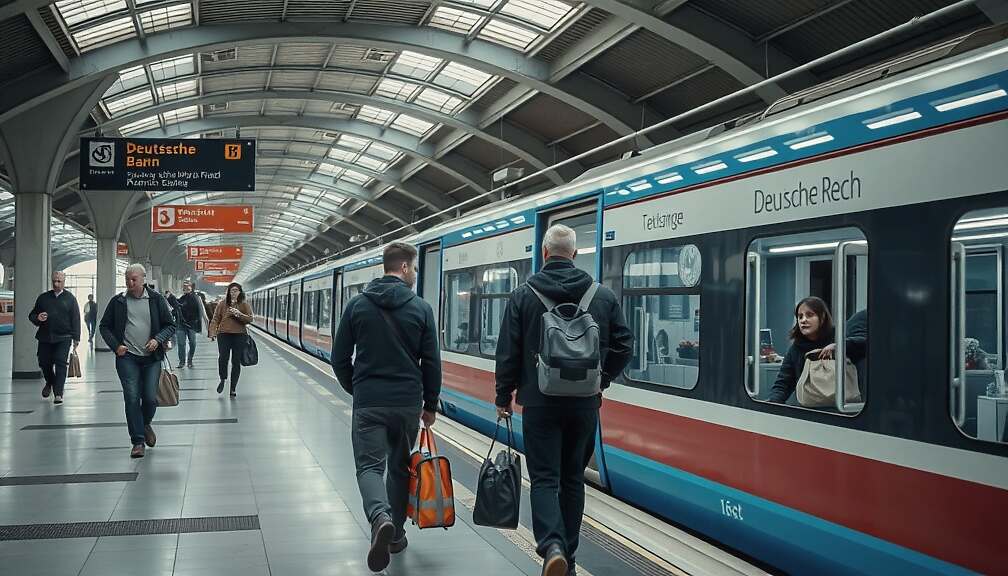
Last year, Deutsche Bahn (DB) paid a total of €156.1 million in compensation to customers for the high level of tardiness in long‑distance traffic. The compensation figure is three times higher than in 2019, yet it is down by almost €41 million compared with the previous year. “We expect part of this drop to be caused by the absence of major disruptions such as strikes last year” said long‑distance CEO Michael Peterson in an interview with the “Süddeutsche Zeitung” (SZ). “Nonetheless, it remains a significant financial burden”.
Media reports indicate that DB’s long‑distance subsidiary also pulled down the group’s overall results. Peterson noted that the division “cannot yet unlock its full revenue potential”. “The numerous construction sites and service interruptions are highly challenging” he added. “When a route is shut down for several weeks, we often see revenue losses in the single‑ or even double‑digit‑million range”.
Another factor is that DB long‑distance paid almost €300 million more than usual for track access fees. “And if the promised track‑price subsidies are delivered only halfway, we have to optimize elsewhere” Peterson said. Despite these pressures, the division managed to improve earnings before interest, taxes, and amortisation (EBITA) by more than €100 million last year.
A lingering issue for Peterson is the utilisation of long‑distance trains, especially on routes where intercity services run alongside regional trains. The main cause, he said, is the nationwide “Deutschlandticket”, which has shifted about 15 million passengers off long‑distance trains. In 2025 the average load factor on long‑distance trains was 48 %, compared with 56 % before the pandemic. “We want to get back to that level” Peterson concluded.