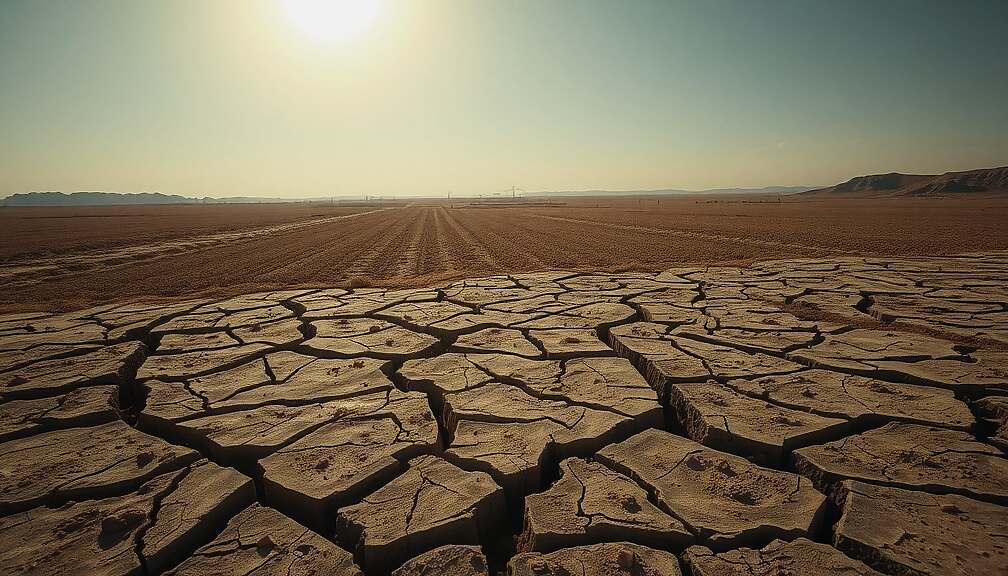
Joachim Rukwied, President of the German Farmers’ Association, has issued a warning regarding the severe impacts of drought on the agricultural sector. Speaking to Der Spiegel, the agricultural functionary stated that persistent dryness and repeated heatwaves are significantly straining farming operations. These conditions are not merely causing crop yields to fall below average and creating difficulties for autumn crops; they are also now jeopardizing the feed supply.
In numerous regions, yields from grassland have sharply dropped, with substantial losses particularly visible in silage maize. In highly affected areas, such as Baden-Württemberg and Bavaria, almost no grass grows on the grasslands after the initial cutting. Rukwied explained that this presents enormous challenges for livestock breeders, affecting both the immediate supply of their animals and their ability to build sufficient winter feed reserves.
While Rukwied is scheduled to present his association’s assessment of this year’s harvest in Berlin this month, initial forecasts suggest the results will be poor. According to Samira Samina Sultan of the German Institute for Economy in Cologne, the current estimate shows that the grain harvest yield this year is well seven percent lower than the previous year. She added that regional losses due to drought in crops like maize and potatoes are likely to be even greater, putting further pressure on already high food prices.
In light of this strained situation, Rukwied is urging the Ministry of Agriculture to expedite the disbursement of EU funds. Although Germany is set to receive additional EU money for direct agricultural premiums starting in 2027-due to the expiration of previous allocations to environmental and support programs-the CSU-led Ministry of Agriculture intends not to pay out approximately 541 million euros initially. They plan to keep this sum as a reserve, potentially for use if EU agricultural payments decrease after 2028.
However, the Farmers’ Association insists that these funds must be paid out in full given the precarious state of farms. Rukwied noted that farmers are already battling low producer prices and subaverage yields, while simultaneously facing high operational costs, such as diesel. He emphasized that this dramatically burdens the liquidity of many businesses. Farmers require special or interim financing to ensure their liquidity and the continuation of their operations. Rukwied stressed that no cuts to the agricultural sector are permissible during this critical time.
Beyond subsidies, improvements to the tax structure are also being called for. Herman Färber, the chairman of the Agriculture Committee in the Bundestag, told Der Spiegel that farmers need more flexible regulatory frameworks to cope with increasingly volatile harvests. He proposes that farmers be allowed to set aside more financial reserves in years when they have good harvests and profits, thereby creating a buffer for drought years. Färber calls on Federal Finance Minister Lars Klingbeil (SPD) to create the necessary tax policy conditions to allow for this approach.