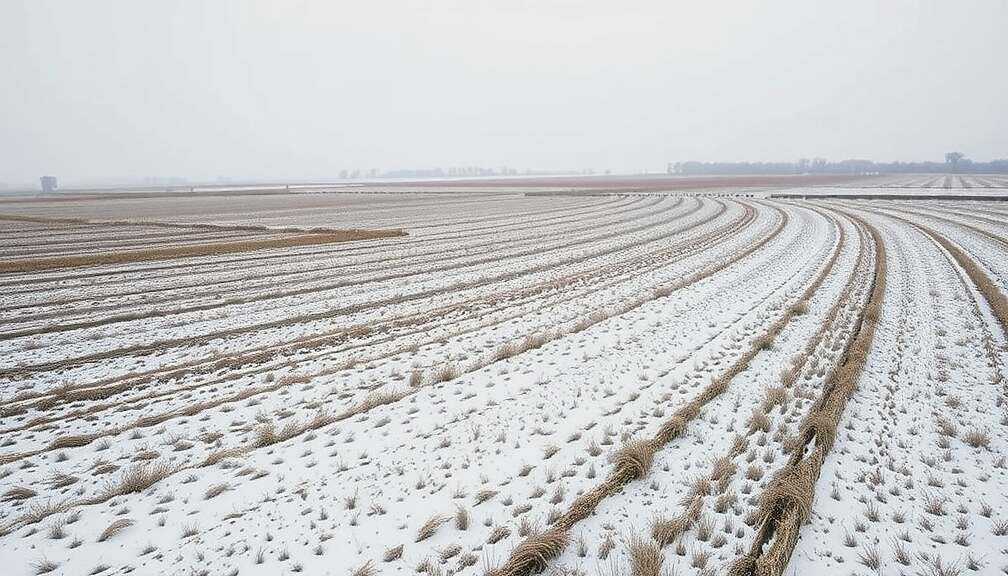
German agricultural associations are projecting a surprising resilience within the nation’s farming sector, suggesting the current cold snap and heavy snowfall could, paradoxically, benefit this year’s harvest. While acknowledging logistical challenges posed by the extreme weather, early assessments indicate a largely positive impact on crop development and soil health.
Konrad Westphale, Vice President of Landvolk Niedersachsen, a significant regional farming association, told the Redaktionsnetzwerk Deutschland (RND) that concerns about damage to winter grain planting or ongoing crops are minimal. He attributes this positive outlook to an early frost in late November, which induced a premature dormancy in plants and significantly reduced aphid infestations. The subsequent snowfall and freezing temperatures are currently viewed as largely advantageous, a perspective particularly noteworthy given the significant impact of Storm “Elli” on Niedersachsen, a region critical to Germany’s food supply.
The potential for improved yields stems from a process known as “Frostgare” whereby ice crystal expansion within the soil loosens the ground. This naturally improves soil aeration and increases its capacity to retain water and nutrients – factors crucial for the next planting season. Peter Röhrig, Managing Director of the Federation of Organic Food Producers, emphasized this advantage, stating Frostgare facilitates easier spring planting and may even help eliminate harmful pests.
However, the optimism isn’t unqualified. Farming associations have highlighted specific operational difficulties. Frozen pipes, hazardous road conditions hindering supply chain deliveries and the reduced ability of snow to hydrate soil compared to rainfall are presenting immediate problems. Furthermore, prolonged periods of extreme cold are extending the livestock housing season, considerably increasing input costs associated with bedding, feed and energy.
The situation highlights a broader debate within Germany regarding agricultural resilience in the face of increasingly erratic weather patterns – a challenge exacerbated by climate change. While the immediate outlook appears positive, the long-term implications of these extreme events and the potential need for government support to mitigate financial burdens remain significant policy concerns for the agricultural sector and policymakers alike. The current resilience, while welcome, may mask underlying vulnerabilities requiring proactive adaptation strategies and robust public investment.