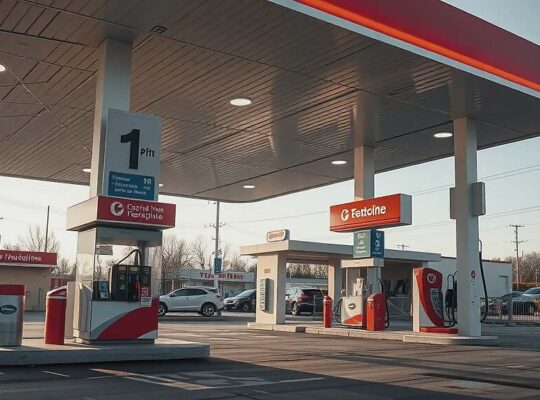
Despite recent easing in the oil markets, economist Gabriel Felbermayr anticipates that fuel prices in Germany will remain elevated over the coming months. According to Felbermayr, tank station prices below two euros are currently unachievable. Even if the situation in the Middle East stabilizes, the entire system needs time to settle into a new equilibrium. He noted that factors such as rerouted shipping, uncertainties surrounding insurance premiums, and ongoing transit fees through the Strait of Hormuz will keep market disruptions active for months. For the end of the year, he considers crude oil prices around $80 realistic, finding the $60 forecast from the start of the year unrealistic for the foreseeable future.
Regarding government intervention, Felbermayr does not currently see a necessity for direct state aid packages for households or the economy. However, he advises politicians to prepare measures for a potential future price surge, emphasizing the need to determine which solutions are genuinely viable. One idea he proposed is using state revenues gained from higher energy prices to redistribute funds back to the citizens, arguing that the state should not become a ‘crisis beneficiary.’
Felbermayr welcomed the current coalition’s restraint, noting that it was positive that they had not immediately announced a massive financial rescue package, unlike some other European governments. He described resisting the initial populist impulse as a favorable sign. Economically, he does not predict a contraction for Germany in 2026. While he foresees sustained economic strain following the ceasefire, he does not anticipate a recession, though growth forecasts are likely to be revised downward by some fractions. Concerning energy storage, the economist expressed concern over depleted gas reserves, which could trigger renewed price volatility. If the market waits solely for falling prices, refilling could be delayed. Felbermayr warned that eventually, a point will be reached where universal purchasing becomes necessary, and such panic buying could strongly boost prices again in the autumn, even if the immediate crises that fueled the initial shortage have passed.