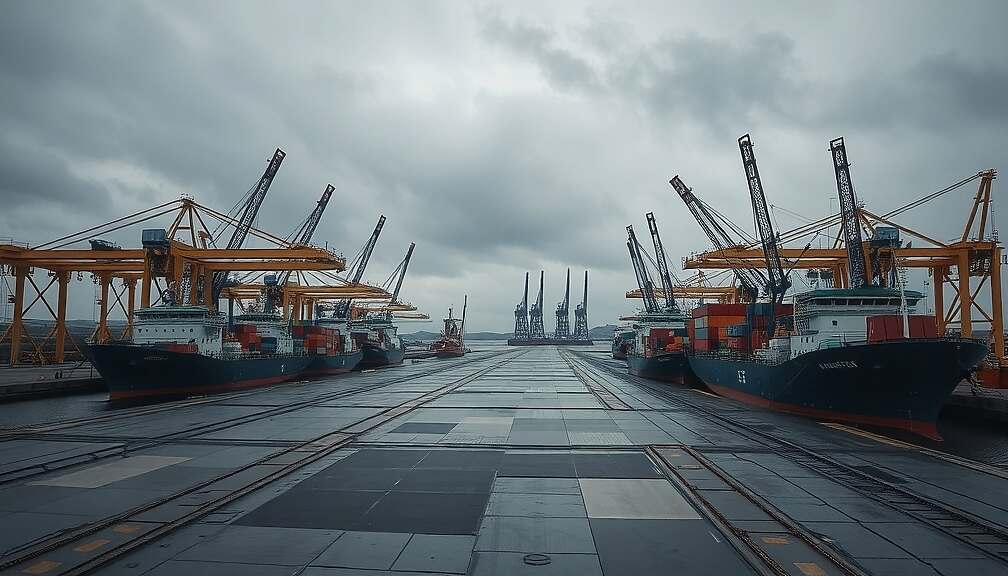
The European Union’s Carbon Border Adjustment Mechanism (CBAM), slated to take effect in January, is facing mounting criticism from economists and business leaders who argue its implementation risks undermining European competitiveness and creating unnecessary bureaucratic burdens. While the underlying motivation-to level the playing field and mitigate the impacts of the EU’s carbon pricing policies-is widely supported, concerns are growing over the practicality and potential consequences of the current design.
Gabriel Felbermayr, formerly President of the Kiel Institute for World Economics and now Director of the Austrian Institute for Economic Research, expressed significant reservations in an unpublished study obtained by “Welt am Sonntag”. He acknowledges the need for a mechanism like CBAM, but argues that Brüssels’ approach presents serious flaws. The complex task of determining the precise carbon footprint embedded within imported goods – components like steel, cement and fertilizers – is proving exceedingly difficult, generating “considerable bureaucratic costs” for businesses.
Felbermayr warns that the CBAM’s structure is likely to incentivize companies engaged in importing these materials to relocate production outside the EU, leading to potential job losses and a contraction of European industries. Rather than a complex tracking system, he proposes a less burdensome combination of export subsidies and a uniform import tariff to alleviate the pressure on European businesses. An alternative, he suggests, would be to continue providing CO2-intensive producers with free certificates, thereby safeguarding their competitive advantage.
The anxieties extend beyond academic circles. Rainer Kirchdörfer, Managing Director of the Foundation for Family Businesses, voiced similar concerns, stating that the EU “has not fully thought through its border adjustment”. He highlighted the anxieties prevalent amongst processors of impacted precursor materials, coupled with fears that exports will also suffer. His criticism is particularly poignant given the fragile state of the current economic climate. While Kirchdörfer agrees that market-based instruments are essential in climate policy, he suggests that the current CBAM implementation is poorly conceived and risks unintended, damaging consequences for the European economy. The debate highlights a crucial tension between the EU’s climate ambitions and the need to ensure a stable and competitive industrial base.