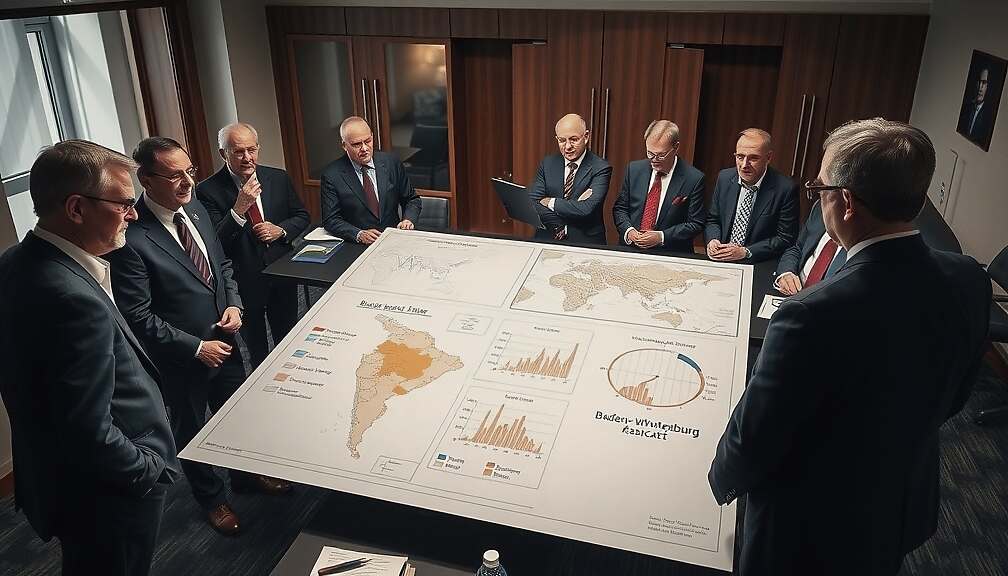
Leading economists have sharply criticized the AfD’s proposals to strengthen the automotive industry in Baden Württemberg and warned of serious consequences for the region’s economic position.
The plans for the March 8, 2026 state election would cause “enormous economic damage” for Germany and, in particular, for the people of Baden Württemberg, said Marcel Fratzscher, president of the German Institute for Economic Research (DIW), to “Handelsblatt”. He described the proposals as “outrageous incompetence” on economic policy.
Clemens Fuest, president of Munich’s Ifo Institute, and Veronika Grimm, a business journalist, echoed similar objections. Their main criticism targets the AfD’s announced “Buy‑BW” programme, which would require public bodies to purchase vehicles exclusively from Baden‑Württemberg production.
Such protectionism would harm the open German economy, Fratzscher warned. It contradicts the fundamental principles of the European single market, risks sparking a trade conflict within Europe and would further weaken Europe’s position relative to the United States and Donald Trump.
Grimm told “Handelsblatt” that “Buy‑BW clauses are neither goal‑oriented nor feasible”. She argued that securing traditional industries requires technological progress, which in turn demands regulatory adjustments in areas such as data protection, artificial intelligence, biotechnology, and nuclear technology.
Fuest pointed out the significant legal obstacles. The “Buy‑BW” idea conflicts with numerous legal provisions that a single state cannot unilaterally alter. As a heavily export‑oriented region, Baden Württemberg has a special interest in open markets. Fuest noted that if other parties were to buy only domestically produced goods, Baden Württemberg would become the greatest loser; moreover, state vehicle purchases carry little economic weight.