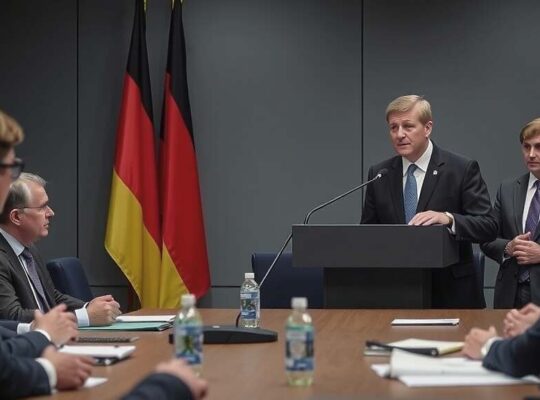
Egypt’s Foreign Minister, Badr Abdelatty, is actively championing the US-brokered peace plan for Gaza, describing it as the “sole option” to avert further devastation in the region, according to an interview with “Der Spiegel”. The plan, heavily reliant on American involvement and political capital, is being presented as a last resort amidst a deepening humanitarian crisis and escalating violence.
Abdelatty’s endorsement arrives against a backdrop of widespread international skepticism regarding the plan’s viability, particularly concerning its stipulations for Hamas disarmament and long-term governance in the Gazan Strip. Egypt is currently undertaking the training of up to 5,000 Palestinian police officers, with a projected expansion to 10,000 personnel intended to bolster security and law enforcement capabilities. The proposed model for Hamas demilitarization, referencing the Northern Ireland experience, involves oversight by a Palestinian or Arab-Islamic governing body, a framework that many critics view as inherently problematic and potentially unable to effectively constrain extremist elements.
Central to the plan’s implementation is the proposed deployment of an international stabilization force. While details regarding the mandate, participating nations and command structure remain subject to ongoing negotiations with the United States, Egypt is presenting itself as the coordinating force for these complex arrangements. This role underscores Egypt’s strategic positioning within the conflict and its willingness to actively partner with the Trump administration’s vision.
Addressing the necessity for American involvement, Abdelatty unequivocally defended the US government, asserting, “Without the USA and Trump, a ceasefire in Gaza would have been impossible”. He emphasized the US’s “crucial importance for the implementation of the plan” effectively acknowledging the significant leverage Washington holds in facilitating any potential agreement.
Despite his backing for the US-led initiative, Abdelatty leveled pointed criticisms at the international community, expressing deep frustration regarding their perceived inaction. He described the collective oversight of the humanitarian deterioration in Gaza over the past two years as “shameful” accusing the global community of passively witnessing “systematic killings and a man-made famine”. This public condemnation carries a clear message that Egypt believes the international community’s failure to engage has exacerbated the crisis and necessitates a more proactive approach, one that is currently being dictated by American policy. The current trajectory highlights the delicate balance between Egypt’s desire for stability, its dependence on US support and the complex realities of navigating a deeply fractured political landscape.