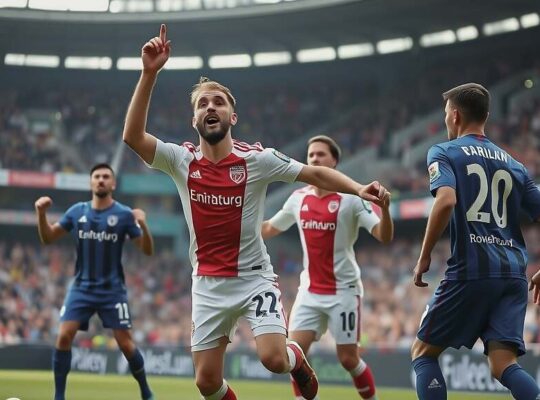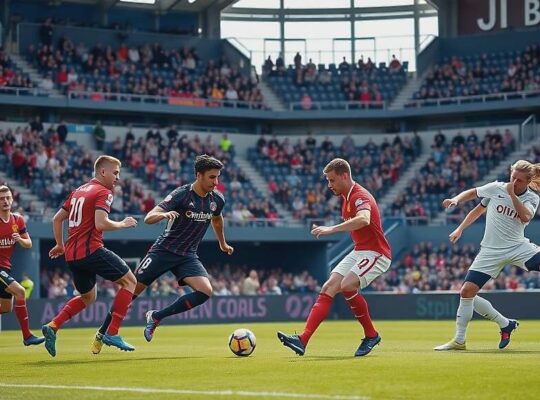
Reports emanating from German sports media outlets, including Sky Sport and Bild, indicate Eintracht Frankfurt is poised to part ways with head coach Dino Toppmöller. The decision, reportedly finalized after a tense crisis meeting convened on Saturday, represents a significant shift in leadership for the club facing mounting pressure and a precarious position in both the Champions League and Bundesliga.
Toppmöller’s tenure, which began in July 2023, saw an initial period of success, most notably securing qualification for the Champions League. However, recent performances have demonstrated a worrying fragility, prompting sharp criticism from Sporting Director Markus Krösche and the club’s supervisory board, led by President Mathias Beck. The analysis following Saturday’s draw against Werder Bremen highlighted a concerning pattern of defensive vulnerabilities and inconsistent results.
Frankfurt’s defensive record is particularly troubling; conceding 39 goals in just 18 Bundesliga matches places them amongst the league’s most porous teams. A stark downturn in form has seen the team secure just a single victory in their last nine competitive matches, underscoring a broader lack of confidence and tactical cohesion. Krösche’s publicly voiced disapproval of the team’s recurring errors marks a clear escalation in the pressure surrounding Toppmöller’s leadership.
The timing of this potential departure is crucial. Frankfurt’s Champions League hopes are hanging by a thread and failure to secure vital points in the Bundesliga could see them drift further from coveted European qualification spots. The club faces a challenging upcoming schedule, starting with a crucial Champions League fixture against Qarabag Agdam, followed by demanding Bundesliga home games against Hoffenheim and Bayer Leverkusen.
While Toppmöller’s tenure yielded an average of 1.51 points per game across 121 matches, the rapid decline in performance raises questions about the club’s strategic direction and the effectiveness of the recruitment and development processes under Markus Krösche. The choice of his successor will be integral in stabilizing the team and salvaging their European ambitions, but the decision itself risks further destabilizing a squad already grappling with significant pressure and internal scrutiny. The move underscores the ruthless nature of professional football management and the high stakes involved in maintaining competitive success.