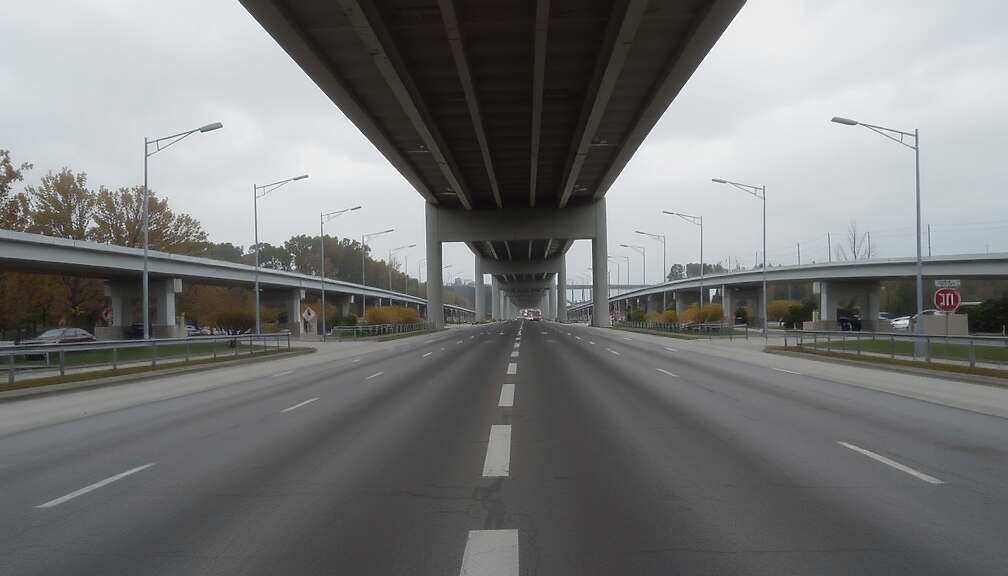
A scathing legal opinion from the German environmental organization BUND has sharply criticized the proposed Infrastructure Futures Act, designed to streamline planning procedures for highways and major roadways. The report, revealed by the “Redaktionsnetzwerk Deutschland” media network, alleges a significant erosion of environmental, nature and climate protection standards through the legislation, raising serious concerns about the rule of law.
BUND President Olaf Bandt warned that the bill risks dismantling crucial legal protections, stating, “We are on the verge of losing large parts of legal certainty in the field of environmental and nature conservation”. He characterized the draft law as a “massive attack on nature” accusing the government of scapegoating environmental groups to deflect blame for delays in infrastructure planning. Bandt argued the root causes lie within a chronically underfunded and understaffed public sector, project proliferation without prioritization and a failure of state responsibility.
The legal assessment identifies a particularly alarming provision granting virtually all highway, railway and waterway projects the designation of “overriding public interest”. This designation, previously reserved for exceptional circumstances, would now apply broadly to everything from motorway service areas to routine traffic bottleneck remediation and entirely new highway construction.
Criticism has also emerged from within the Green Party. Tarek Al-Wazir, Chairman of the Transport Committee and former Hessian Transport Minister, acknowledged the need to address the often protracted planning and approval processes, but cautioned against prioritizing speed over direction. He emphasized the necessity of improved collaboration between planning and approval authorities, advocating for increased digitalization to facilitate early engagement with stakeholders, fostering local acceptance rather than antagonism.
Al-Wazir further argued that genuine infrastructure strengthening requires strategic investment prioritization to avoid parallel planning initiatives. He pointed to recurring planning freezes, tendering suspensions and construction shutdowns driven by annual budget cycles and a perceived lack of political commitment to pre-defined priorities. “The current financing method and a deficit of political will are the main reasons for the eternal planning processes” he concluded.