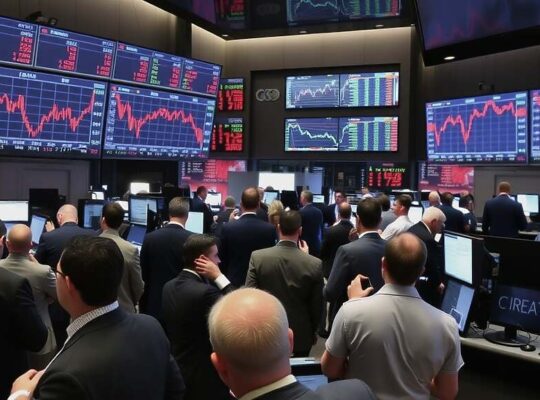
The German stock market opened Thursday with gains, signaling a tentative optimism tempered by persistent underperformance relative to US markets. The DAX index, a key indicator of German economic health, stood at approximately 23,835 points around 9:30 AM, marking a 0.6% increase from the previous day’s closing level. Leading the gains were automotive giants Mercedes-Benz, Porsche and Volkswagen, while BASF, Airbus and RWE trailed at the lower end.
The market’s upward trajectory is largely attributed to revised expectations regarding US Federal Reserve monetary policy. Following a weaker-than-anticipated US private sector employment report released Wednesday, the probability of a rate cut at the Fed’s upcoming meeting is now priced in at nearly 98%, according to Thomas Altmann of QC Partners. Altmann cautioned that the official jobs report and inflation data, due after the policy decision, are unlikely to alter this course, suggesting an imminent shift in monetary policy. This anticipation of lower interest rates has indeed provided a boost to European equities.
However, a significant divergence persists between the performance of the DAX and the S&P 500. While the S&P 500 edged close to a new record high on Wednesday, the DAX still lags nearly four percentage points behind. This contrast highlights a broader concern about the relative health and resilience of the German economy compared to its American counterparts. The DAX remains in negative territory year-to-date, in stark contrast to the S&P 500’s impressive 10% gain. This gap raises questions about the impact of lingering geopolitical uncertainties, supply chain vulnerabilities and potentially, a slower pace of structural reforms within Germany.
The euro also weakened slightly against the US dollar, trading at $1.1666, reflecting broader market sentiment and potentially undermining investor confidence in the Eurozone’s economic outlook. Meanwhile, rising oil prices, with Brent crude fetching $62.91 a barrel, added another layer of complexity to the economic landscape, potentially fueling inflationary pressures despite the anticipated interest rate cuts. The market’s performance and the widening gap with US benchmarks, will undoubtedly become a focal point for policymakers and investors alike as they navigate the evolving economic climate.