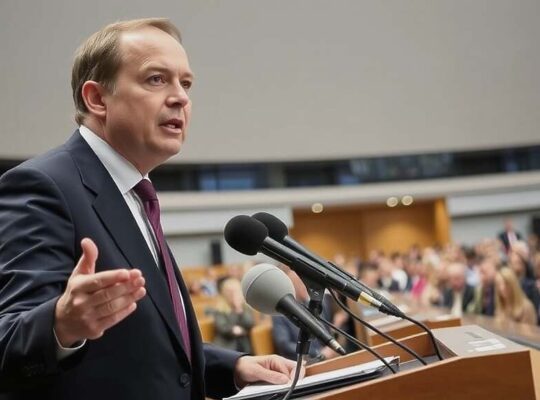
Florian Müller, the research‑policy spokesperson for the Union members of the Bundestag, warned that the 500 million‑Euro research package for post‑infectious conditions such as Long Covid is likely to create unrealistic expectations. “Basic research requires time and perseverance” he told the “Redaktionsnetzwerk Deutschland” (free‑day editions). “It would be naïve to assume that concrete results that can help patients immediately will appear in one or two years”. He added that the pharmaceutical sector will first need scientific findings before it can develop appropriate drugs.
The funding announcement, Müller said, should already trigger a cultural shift in society. “We are sending a clear message that we take the suffering of affected people seriously and now, as the federal government, we are uniting the strengths of science and industry to treat post‑infectious diseases such as Long Covid and ME/CFS” he explained. That stance, he added, also serves as a signal that these conditions are gaining societal recognition.
“Post‑infectious diseases cause unimaginable pain” Müller observed. “What is especially distressing is the extreme helplessness of the patients, because the illness is often not taken seriously and psychological problems are wrongly assumed”. The loss of confidence in state institutions is substantial, and rebuilding that trust is essential.
Federal Research Minister Dorothee Bär (CSU) will present details of the “National Decade Against Post‑Infectious Diseases” on Friday. In Germany an estimated two to three million people suffer from Long Covid and Myalgic Encephalomyelitis/Chronic Fatigue Syndrome. Many of those affected reject the terms “Chronic Fatigue Syndrome” and “Chronic Exhaustion Syndrome” which they perceive as trivializing.