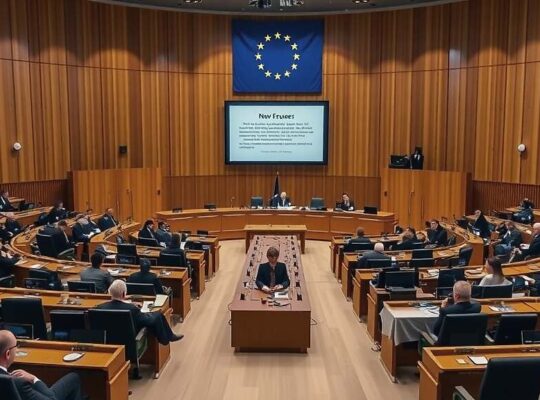
The United States’ recent sanctions against former EU Commissioner Thierry Breton and the female executives of the Berlin-based non-profit “Hate Aid” have ignited a firestorm of criticism in Brussels and within the German Bundestag. The move, which has been widely interpreted as an attempt to undermine the EU’s regulatory autonomy, is facing a unified and increasingly assertive response from European policymakers.
The European Commission released a statement on Wednesday condemning the American decision, emphasizing the fundamental importance of freedom of expression within Europe and its shared value with the United States and the broader democratic world. The statement underscored the EU’s sovereignty to regulate economic activities within its open and rule-based internal market, adhering to democratic principles and international commitments. The Commission specifically defended its Digital Services Act (DSA), highlighting that it was designed to ensure fair competition and safe conditions for all businesses, applied without discrimination. Officials are demanding clarification from Washington regarding the rationale behind the sanctions, reserving the right to take “swift and decisive action” to safeguard regulatory independence.
The backlash extends beyond the Commission. Johannes Schätzl, the SPD’s spokesperson for digital policy within the Bundestag, characterized the sanctions as a “severe intrusion into civil society engagement”. He urged the German government to unequivocally defend the rule of law and the work of independent organizations, offering diplomatic support to those targeted and demanding clarity from Washington regarding the legal basis and proportionality of the measures. While dismissing accusations of censorship levelled by some, particularly those on the political right, Schätzl voiced concern over the convergence of these narratives with those promoted by the US administration.
Marcel Emmerich, the Green Party’s domestic policy spokesperson, echoed this sentiment, deeming the sanctions an “attack on our European democracy”. Emmerich directly challenged the hypocrisy inherent in claiming to champion freedom while simultaneously punishing individuals for operating within the framework of democratically established laws. He warned against European silence, advocating for a clear and forceful response and stressed the necessity for Germany to actively support the resolute enforcement of the Digital Services Act within the EU.
The situation underscores a growing tension between the EU’s ambition to establish itself as an independent regulatory power and the potential for political pressure from the United States, highlighting the ongoing struggle for digital sovereignty.