The European Commission unveiled a new strategy for the Arctic on Tuesday, emphasizing investments in enhanced security, resilient infrastructure, and new economic opportunities for those who call the region home. Ursula von der Leyen, President of the Commission, stated that the Arctic is Europe’s northern neighbor-close, connected, and vital to Europe’s future, but it is changing rapidly. She pointed out that evolving shipping routes and resource development are accelerating strategic competition in the area.
Kaja Kallas, the EU’s High Representative for Foreign Affairs, asserted that Arctic security is integral to European security. She noted that as Russia and China expand their influence and ambitions, the Arctic has become a frontline in global power struggles.
The revised strategy reflects this new reality by placing security at the forefront. To defend the Union’s interests, the Commission plans to strengthen efforts in monitoring capabilities, infrastructure development, military mobility, and robust defense technologies capable of withstanding the harsh climate. Access to Arctic shipping lanes and natural resources is seen as a matter of strategic importance for the EU.
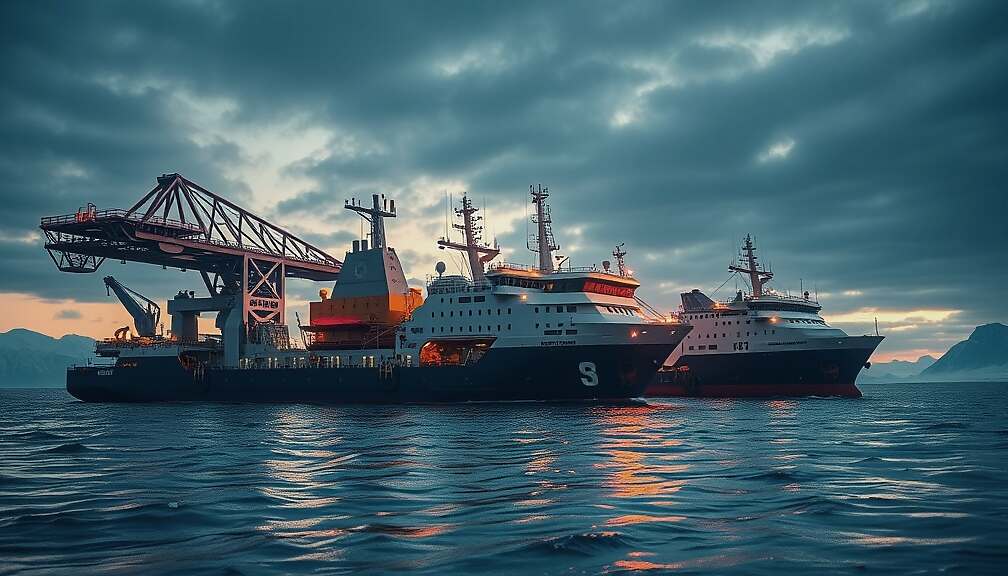
The strategy includes plans to expand the EU’s capacity for icebreakers. Furthermore, it commits to promoting Arctic capabilities with dual-use and multi-purpose functions, ensuring that these benefits accrue to the local communities, the Arctic ecosystem, and the EU itself. A new maritime safety center is also planned to help member states and partners with the exchange of information and the improvement of maritime monitoring efforts in the North.
In an immediate step, the EU intends to support the establishment of an “Arctic Cable Hub.” This hub will be responsible for monitoring, protecting, and repairing submarine cables in the North Atlantic and the Arctic. Significant investment will also be directed toward intelligent technologies to detect potential threats to this critical infrastructure. This platform is set to be further developed to track vessels belonging to shadow fleets, uncover illegal fishing and environmental pollution, and improve the coordination of search and rescue operations.
The Commission also announced a commitment to enhancing climate research, observation, and monitoring to better understand changing weather patterns and rising sea levels. This effort will be supported by “Ocean Eye,” a new EU initiative for marine observation, which aims to improve climate forecasts, strengthen maritime traffic safety, and aid efforts for adaptation to climate change.
Finally, the EU plans to integrate European infrastructure-including ports, rail connections, energy terminals, and digital and satellite networks-into new trade and transport networks across the Arctic. The Commission explained that this connectivity will improve links to European markets and beyond, while simultaneously strengthening supply chains. This improved mobility is crucial for regional solidarity, military movement, and overall economic development.