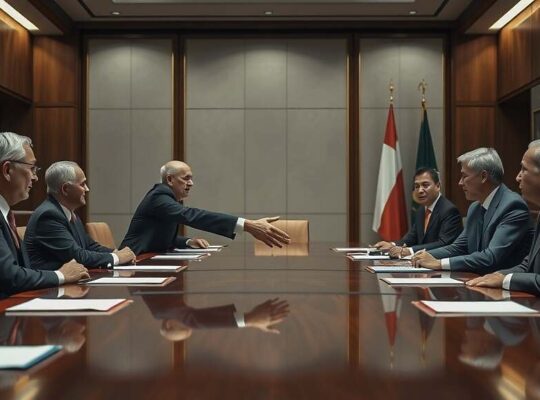
The European Union’s protracted negotiations with Mercosur nations – Brazil, Argentina, Uruguay and Paraguay – have culminated in a tentative agreement hailed by German Chancellor Friedrich Merz as a “milestone in European trade policy”. Merz, leader of the Christian Democratic Union (CDU), framed the deal as a crucial demonstration of the EU’s “strategic sovereignty and capacity for action” emphasizing its potential to bolster economic ties and benefit both Germany and Europe.
However, the celebratory rhetoric masks a deeper anxiety surrounding the deal’s implications and the lengthy, quarter-century duration of the negotiations. Merz himself acknowledged this, criticizing the timeline as unacceptable and calling for significantly accelerated processes in future free trade agreements. This seemingly innocuous comment hints at a broader internal debate within the EU regarding its trade strategy and the efficiency of its negotiation processes.
The agreement, poised to create the world’s largest free trade zone encompassing over 700 million consumers, has already drawn considerable criticism. Concerns centre primarily on the potential for unfair competition for European farmers, who fear being overwhelmed by subsidized agricultural imports from Mercosur countries. Equally contentious is the worry that the agreement could lead to a weakening of EU environmental and labour standards, a point of particular sensitivity given recent debates around sustainability and social responsibility within the bloc.
While the agreement was formally reached between the 27 EU member states on Friday, the path to ratification remains complex. National capitals must now formally approve the deal, followed by a critical vote in the European Parliament. This parliamentary scrutiny will likely be intensely debated, providing a platform for dissenting voices and potentially leading to amendments or even a rejection of the agreement. The fragility of the accord highlights the political tightrope the EU is walking, balancing economic ambition with the need to protect constituents and uphold core values in an increasingly interconnected world. The success of the Mercosur deal ultimately hinges on navigating these tensions and convincing a skeptical public of its long-term benefits.