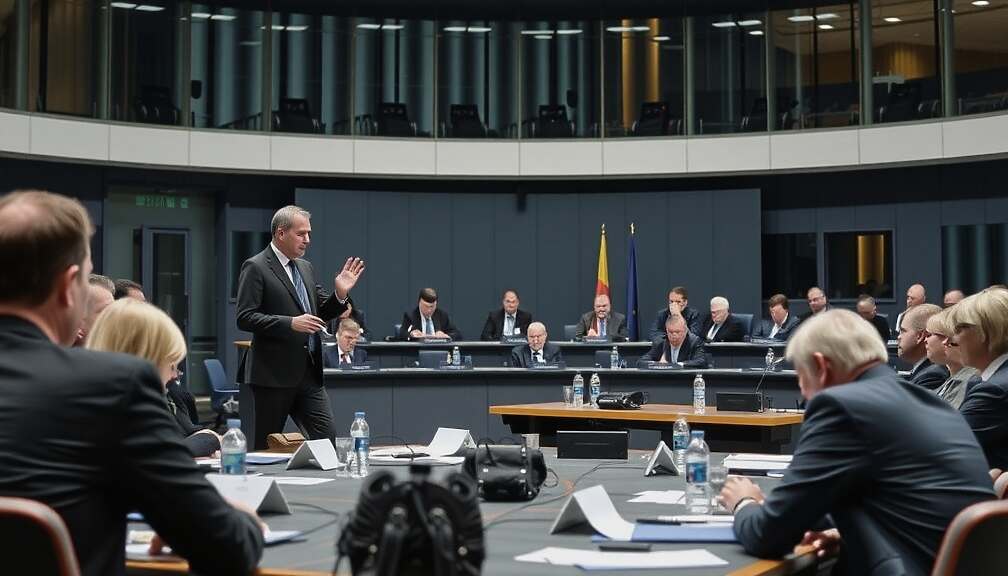
David McAllister, chair of the EU Parliament’s Foreign Affairs Committee, called the Greenland dispute the “heaviest crisis within NATO so far” and warned about a potential repeat of demands from U.S. President Donald Trump. He told “Welt am Sonntag” that the worst scenarios had been averted, but that the EU must be prepared if Trump changes his mind again. McAllister said the EU had remained calm toward Trump while clearly laying out its red lines, such as the protection of territorial integrity.
Former German economy minister Peter Altmaier voiced a similar view. He noted that the Europeans’ firm and decisive posture in Davos-particularly in Macron’s speech-and their willingness to adopt trade‑policy measures had impressed Trump more than earlier attempts at conciliation. Altmaier also warned that his annexation agenda for Greenland had not been abandoned and that the standoff would endure for a long time.
Bernd Lange, chair of the EU Parliament’s Trade Committee, sees no lasting easing of the trans‑Atlantic relationship. He says economic ties between Europe and the United States remain strained and that, historically, uncertainty for European business has never been so great. He also stresses that the U.S. depends on Europe. In the event of new threats from Washington, the EU could consider measures such as excluding companies like Apple and Google from public contracts or imposing fees on their services.
Monika Schnitzer, head of the so‑called “Wirtschaftsweisen” group, told the newspaper that in conflicts like the Greenland dispute the EU should employ tools sharper than tariffs. She argued that steps which make it more difficult for U.S. firms to access the large EU market for public procurement would be especially effective. She added that targeted actions in the services sector, for example on digital offerings where U.S. firms are strongly represented, would have a noticeable impact. Such focused measures, she said, are more impactful than blanket tariffs because they generate pressure without unnecessarily damaging overall trade.