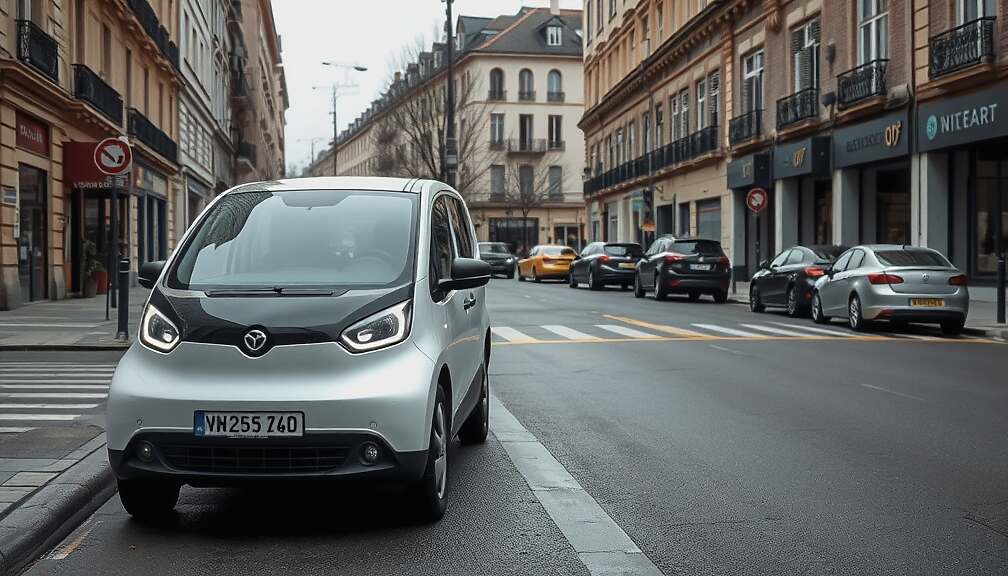
The European Commission is poised to introduce stringent new regulations governing the electrification of corporate vehicle fleets, a move critics are already labeling a de facto ban on internal combustion engines implemented through the back door. Details outlined in a draft regulation for “clean corporate fleets” reported by Handelsblatt, reveal a phased approach beginning in 2030 that aims to rapidly decarbonize commercial vehicle operations across the EU.
The proposals are strategically targeting a segment with significant impact: company car schemes. Accounting for roughly 60% of new vehicle registrations within the EU and heavily influencing the used car market, company vehicles represent a crucial lever for accelerating the transition to electric mobility. Under the new framework, the long-standing benefit enjoyed by employees utilizing company cars – a significant tax advantage – will be increasingly restricted. Brussels intends to limit this privilege solely to specific vehicle classes, effectively phasing out eligibility for traditional gasoline and diesel vehicles.
While the Commission appears to be offering a degree of flexibility to smaller and medium-sized enterprises through potential exemptions, the underlying pressure on larger corporations and fleet managers is substantial. Germany, in particular, is facing the challenge of aligning its national tax policies to meet the EU-wide objectives. The requirement to modify the lucrative “company car privilege” represents a politically sensitive issue, necessitating a delicate balancing act between environmental ambition and potential economic repercussions for businesses.
Adding further complexity, the Commission is expected to unveil a related legislative package on Tuesday intended to ease the burden on automobile manufacturers regarding the eventual combustion engine ban. However, the combined effect of these measures is generating increasing concern amongst industry observers who argue that the proposed corporate fleet regulations function as a sophisticated workaround to avoid a direct and potentially more disruptive, ban on internal combustion engines. The unfolding situation presents a crucial test of the EU’s commitment to a green transition and its ability to manage the complex interplay between environmental policy, economic realities and political sensitivities.