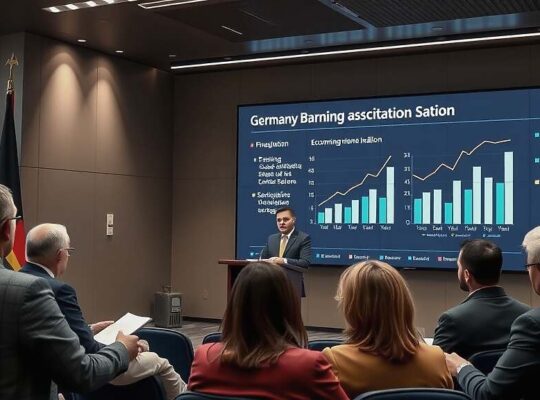
Europe is dramatically increasing its military spending and increasingly relying on multinational procurement programs, a shift signaling a potential reshaping of the continent’s defense landscape. A recent study by consultancy Strategy&, reported by Der Spiegel, reveals that procurement volume through these joint ventures has surged by 230 percent between 2021 and 2025, reaching approximately €66 billion – a stark contrast to the preceding five-year period. While national procurement still accounts for the majority (roughly €127 billion), this figure has largely stagnated, highlighting the accelerating trend toward collaborative military acquisition.
However, experts caution that significant deficits remain in Europe’s overall approach to defense procurement. “Europe must leverage its entire industrial capability to become defense-ready” asserted Albert Zimmermann, a Strategy& partner and arms procurement specialist. The current system, characterized by duplicative efforts and national silos, is demonstrably inefficient. “It simply doesn’t function if everyone builds the same thing” Zimmermann stated, emphasizing the need for greater standardization and the pooling of resources across member states.
Multinational defense projects are often fraught with political and organizational challenges, a reality acknowledged by analysts. No single European nation possesses the full spectrum of industrial capabilities or the financial muscle to independently develop and maintain the sophisticated defense systems now deemed essential. Organizations like the Organisation for Joint Arms Cooperation (OCCAR) and the European Defence Agency (EDA) are increasingly seen as critical instruments for navigating this complexity. OCCAR, for example, recently managed the procurement of the H145M light combat helicopter for the German military and other European forces.
Despite their successes, these organizations are grappling with a widening gap between their capacity and the growing demand placed upon them. OCCAR’s comparatively small workforce of just over 400 employees stands in sharp contrast to Germany’s own defense procurement office, which boasts approximately 11,800 personnel. This disparity underscores the urgent need for increased investment and resources to enable these bodies to effectively manage the expanding scope of their responsibilities.
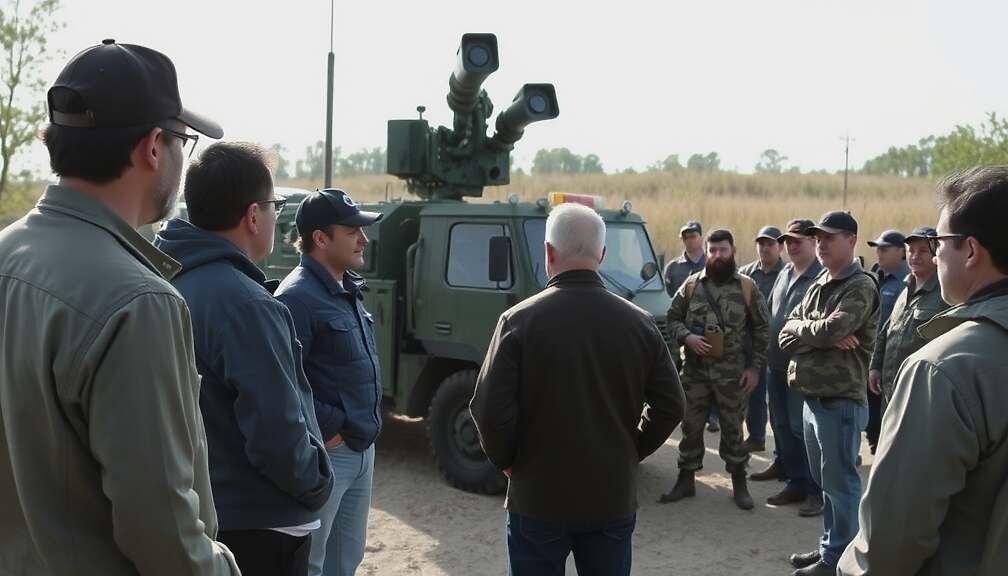
Beyond the procurement of complex systems, experts argue for a streamlining and decentralization of processes for tactical and standardized weaponry. The urgency of this need has been driven, in part, by the ongoing conflict in Ukraine. Kyiv’s innovative DOT-chain Defence platform – a digital catalogue facilitating rapid acquisition of mass-produced drones and other weaponry – demonstrates a model for decentralized ordering and continuous innovation. Germany and other European nations, currently lack a comparable system, potentially hindering their ability to swiftly adapt to evolving threats and operational demands. The reliance on traditional, cumbersome procurement methods risks lagging behind the agility demonstrated by Ukraine and other emerging defense innovators.