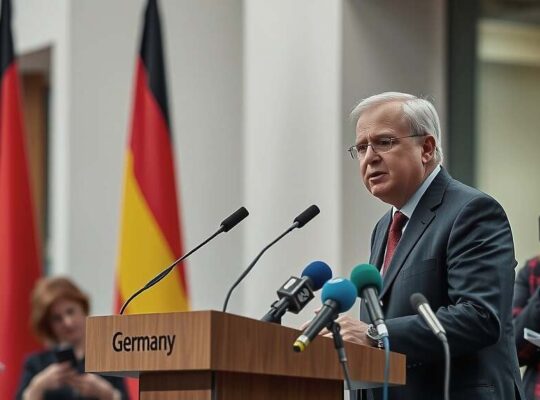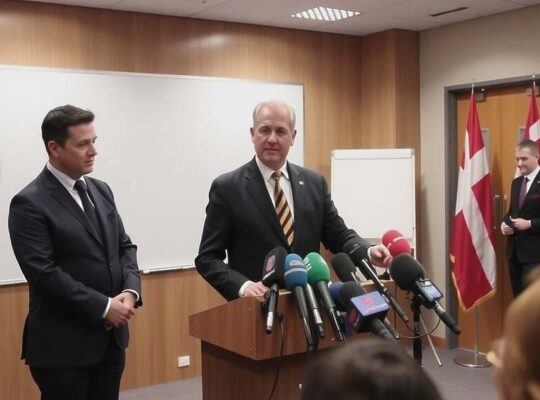
A wave of diplomatic reassurance rippled through Europe this week as several key nations publicly reaffirmed their commitment to Greenland’s sovereignty, directly challenging renewed overtures from Washington regarding the Arctic island. A joint statement released Tuesday by the governments of Germany, France, Italy, Poland, Spain, the United Kingdom and Denmark unequivocally declared, “Greenland belongs to its people.
The declaration underscored a principle of self-determination, stating that matters pertaining to Denmark and Greenland are solely within their jurisdiction. This pointed response to recent, albeit seemingly preliminary, discussions within the U.S. government about potentially acquiring Greenland – an idea previously floated and dismissed in 2019 – signals a strong European consensus against any external interference in the island’s future.
The statement simultaneously highlighted the escalating strategic importance of the Arctic region. European leaders emphasized that Arctic security remains a central priority, inextricably linked to both international and transatlantic stability. The NATO alliance has already acknowledged the region’s increasing geopolitical weight, prompting enhanced military presence, activity and investments across European member states designed to secure the Arctic and deter potential adversaries.
While acknowledging Denmark’s vital role as a NATO member and the necessity of collaborating with the United States on Arctic security, the joint statement carefully emphasized adherence to the foundational principles of the United Nations Charter. Sovereignty, territorial integrity and the inviolability of borders – concepts increasingly tested by shifting global power dynamics – were explicitly defended as “universal principles” that will not be abandoned.
Analysts interpret this coordinated statement as more than a simple demonstration of solidarity. It represents a deliberate effort to manage a delicate geopolitical situation, navigating the complexities of the transatlantic relationship while firmly asserting European autonomy and safeguarding the established international legal framework in a region of growing strategic competition. The message directed towards Washington is clear: While partnership is valued, respect for sovereignty remains non-negotiable. The resurgence of U.S. interest in Greenland, even in preliminary discussions, has subtly exposed underlying tensions over ownership, control and influence in the rapidly changing landscape of the Arctic.