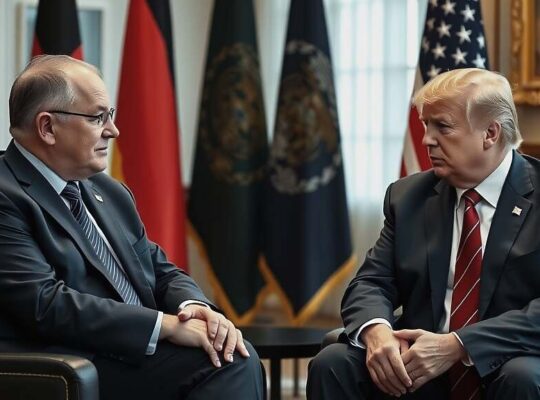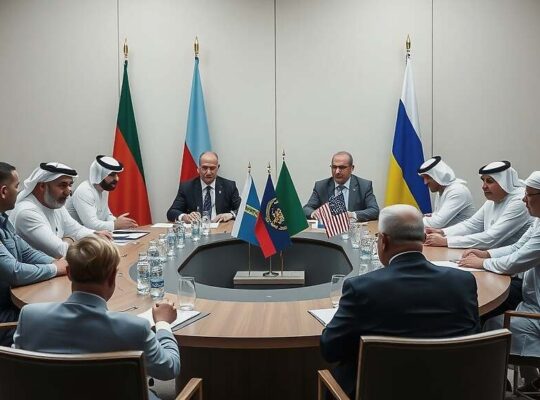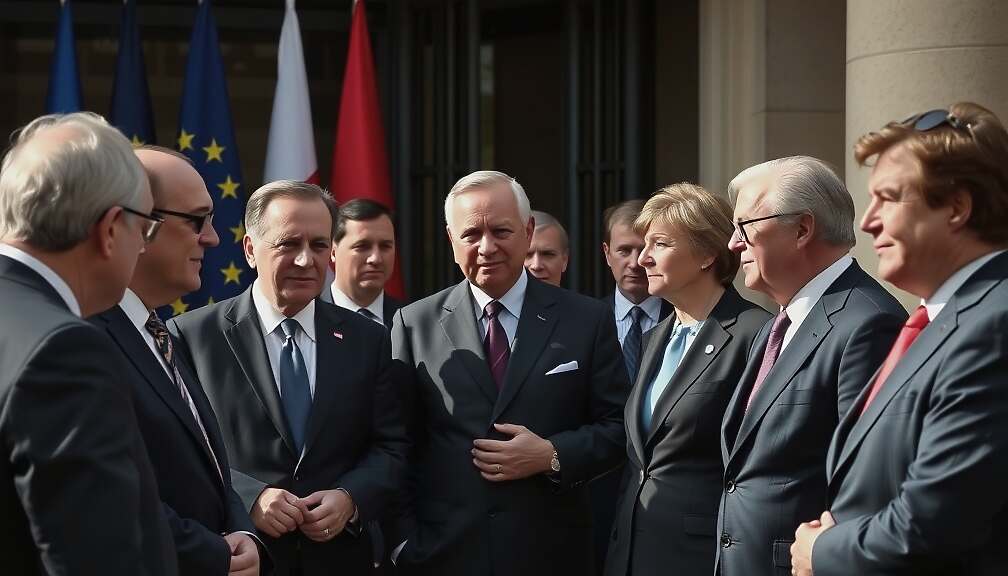
A transatlantic quartet – German Chancellor Friedrich Merz, US President Donald Trump, French President Emmanuel Macron and UK Prime Minister Keir Starmer – convened via telephone on Wednesday to discuss the stalled negotiations surrounding a potential ceasefire in Ukraine. The call, confirmed by a government spokesperson, Stefan Kornelius, underscored the escalating urgency surrounding the conflict and the divergence in approaches to achieving a resolution.
The discussion reportedly focused on the progression of talks, with a commitment to continued “intensive work” on a peace plan. While presented as a collaborative effort, the emergence of a US-led “28-point plan” in November has injected significant controversy into the process. This plan, reportedly formulated without direct input from Ukrainian authorities, proposed concessions including the cession of Crimea and the regions of Luhansk and Donetsk to Russia, alongside Russian control over substantial areas of Kherson and Zaporizhzhia. Furthermore, it stipulated a reduction in the Ukrainian military and a constitutional commitment barring NATO membership – stipulations met with fierce opposition from Kyiv and its European allies.
The recent meeting between Merz, Macron and Starmer with Ukrainian President Volodymyr Zelenskyy highlighted these deep-seated disagreements. Sources indicate that the contentious 28-point plan has been narrowed to 20 points, a move seemingly intended to alleviate some of the most egregious concessions initially proposed.
However, the underlying tension remains. Ukraine’s steadfast refusal to cede territory, a position underscored by constitutional limitations on its government’s authority to do so, directly challenges the trajectory of the US plan. Moreover, European leaders have voiced concerns over what they perceive as an inappropriate level of influence from Russia through the US proposed framework and its potential to destabilize both the European Union and NATO.
The closed-door nature of these negotiations and the evolving content of the proposed plan raise critical questions regarding the inclusivity of the process and the extent to which the future of Ukraine is being determined by external powers, potentially undermining the principles of sovereignty and self-determination. The emerging rift between the US approach and the stance of European allies signals a potential fracturing of the transatlantic alliance as the conflict enters a new, potentially volatile phase.