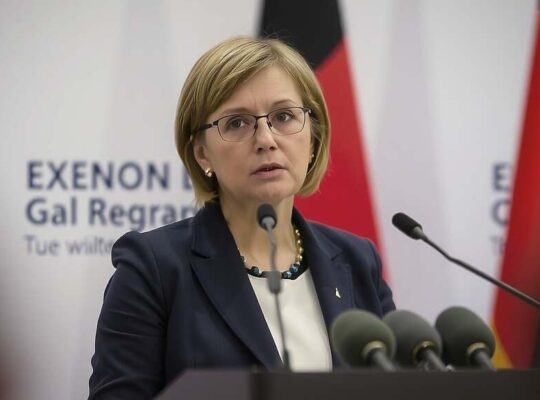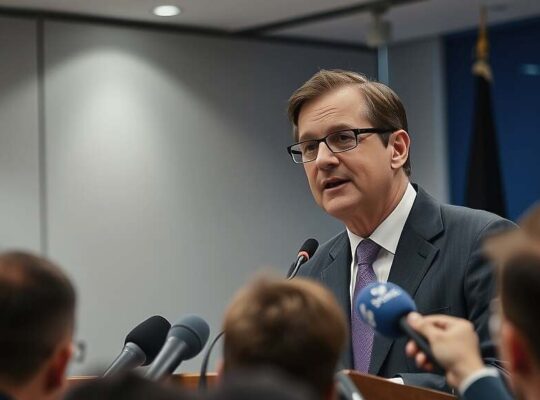
The decision to exclude the Alternative for Germany (AfD) from the Munich Security Conference between 2022 and 2025 was a principled stand rooted in the conference’s foundational values and a rejection of extremism, former director Christoph Heusgen has affirmed. Speaking to the Tagesspiegel, Heusgen defended the controversial move, emphasizing the conference’s commitment to “peace through dialogue” as a core tenet.
Heusgen’s justification centered on the AfD’s repeated displays of disrespect towards democratic processes and international engagement. He specifically cited the party’s walkout during a speech by Ukrainian President Volodymyr Zelenskyy as a clear indication of their unwillingness to engage in constructive dialogue, rendering an invitation unwarranted.
Beyond this immediate provocation, Heusgen articulated a more profound rationale. He highlighted the legacy of Ewald von Kleist, the founder of the Munich Security Conference, who actively resisted the Nazi regime. As Kleist’s successor, Heusgen asserted he felt obligated to uphold those values by refusing to platform parties exhibiting elements of far-right extremism. “I wouldn’t have wanted to roll out the red carpet for a party that is, in parts, demonstrably far-right” he stated, suggesting von Kleist would have likely supported the decision.
The re-invitation of the AfD this year by current director Wolfgang Ischinger, while presented as a gesture towards inclusivity, now stands in stark contrast to Heusgen’s previously established principles. It raises questions about the evolving political landscape surrounding the conference and the potential dilution of its commitment to confronting extremism. The move is likely to fuel debate about the responsibilities of international forums in engaging with parties holding views that challenge democratic norms and values and whether providing a platform, however limited, risks legitimizing such positions. Heusgen’s comments serve as a pointed reminder of the conference’s historical grounding and the delicate balance between dialogue and upholding ethical boundaries.