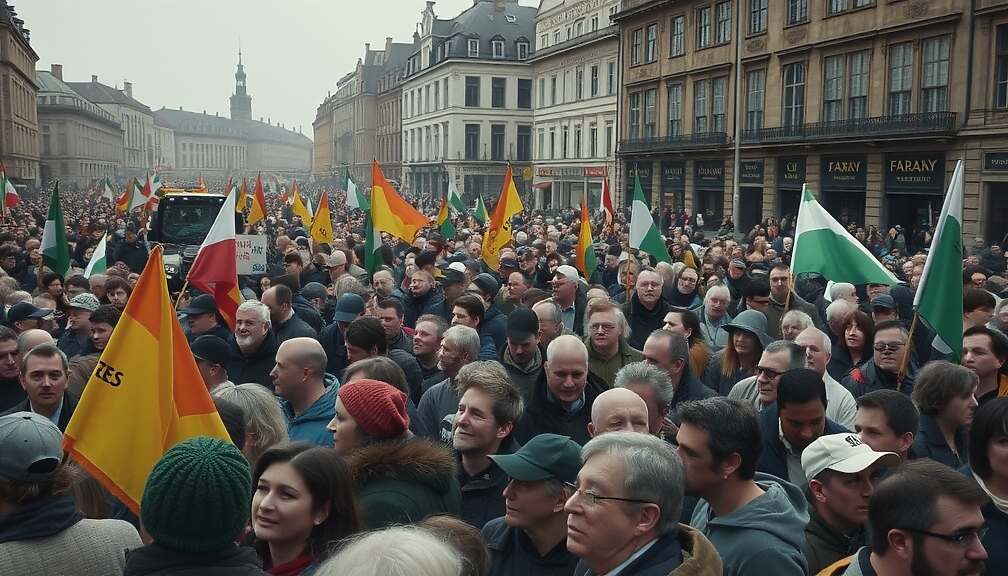
Brussels was brought to a standstill Thursday as an unprecedented wave of farmer protests swelled across the European Quarter, threatening to disrupt the final EU summit of the year. Estimates place the number of participating farmers from all 27 EU member states at approximately 10,000, marking what agricultural lobby Copa-Cogeca has declared the largest agricultural demonstration in Brussels this century.
The demonstrations, organized across the bloc, represent a potent expression of rural discontent and sharply highlight the disconnect between farmer concerns and the EU’s political agenda. Protesters voiced grievances spanning a broad spectrum of agricultural policy failures, including perceived unacceptable reforms to the Common Agricultural Policy (CAP) and proposed cuts to the EU budget allocated to the sector. Beyond purely budgetary concerns, the protests specifically targeted what farmers are characterizing as “unfair EU trade policies” a clear reference to the controversial Mercosur trade agreement, which remains a point of friction. Excessive bureaucracy was also cited as a key trigger for the widespread mobilization.
However, the timing of the protests exposes a critical political oversight. While the farmers’ chorus of concern reverberates across Brussels, agricultural issues are reportedly relegated to a secondary role during the summit’s discussions, overshadowed by debates surrounding the utilization of frozen Russian assets to support Ukraine and the highly charged topic of EU enlargement. Critics are already questioning whether this prioritization effectively ignores the vital role of the agricultural sector in European economies and food security.
The sheer scale of the demonstration raises significant questions regarding the EU’s responsiveness to rural constituencies and emphasizes the increasing political pressure on policymakers to address the concerns of Europe’s farmers. The protests serve as a stark reminder that ignoring the needs of those who produce the continent’s food carries considerable political risk, potentially impacting public perception of the EU and complicating future policy implementations.