Former federal environment minister Jürgen Trittin, who has long been a leading voice in the Greens, urges his party to exercise patience and concentrate on its core brand as it seeks a new source of strength.
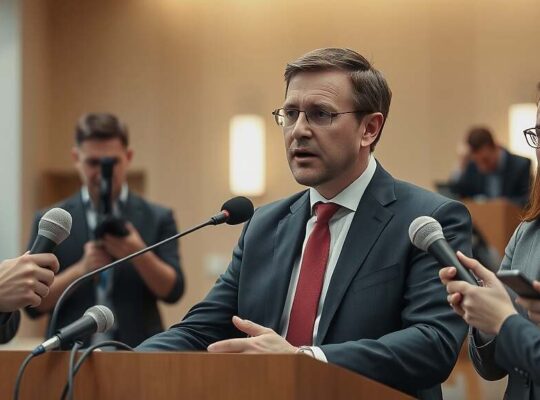
“Moving from government to opposition takes time” he told the “Welt” in the Saturday edition. “We learned that in 2005 and then achieved the best result in Green history in 2009” he recalled, pointing to the party’s first year in opposition after its defeat in the federal election.
Trittin stresses that the Greens must hone in on their brand of social and ecological renewal. He argues that Germany’s current global circumstances are advantageous for the party: the country should break free from dependence on Putin’s oil and gas while avoiding reliance on U.S. gas. Following President Trump’s threat to confront Europe in the National Security Strategy, the EU must become more sovereign both militarily and energy‑wise-a task for which only the Green Party can credibly act.
In Bavaria, Katharina Schulze, the Greens’ chair in the state parliament, identifies closer citizen engagement as the key to future electoral success. “The party must portray itself as pragmatic, reliable and close to the everyday lives of people” she says. She stresses the need to restore the public’s belief that politics is on their side and truly tackles problems, especially amid an acute economic crisis.
Schulze also points to an image shift as an essential part of this strategy. “It is about more quality of life rather than sacrifice, more of what everyone needs daily, and growth where it really matters” she notes.
Meanwhile, Julia Hamburg, the Green state minister for culture in Lower Saxony, announced that the party intends to expand its focus beyond its traditional base. In a “listening campaign” her state association will specifically target areas where the Greens have been less visible-ranging from large steelworks in Lower Saxony to regions where the party’s presence has been comparatively weak.