Eurojackpot’s Escalating Jackpot and the Underlying Social Concerns
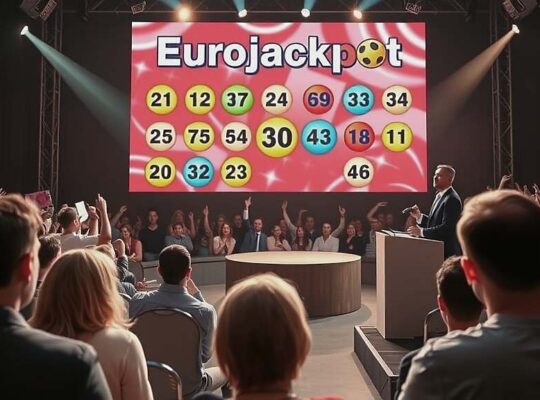
The latest Eurojackpot draw, held Friday evening, yielded numbers 15, 21, 26, 29 and 42, with Euro numbers 4 and 12.. While the prospect of these seemingly random digits representing a life-altering windfall excites many, the draw also highlights a broader, increasingly pertinent discussion around state-sanctioned gambling and its potential societal impact.
The odds of securing the top prize – a guaranteed minimum of €10 million per draw – remain staggeringly slim, estimated at one in 140 million. This astronomical unlikelihood underscores the fundamental nature of the game: a lottery driven by hope and fueled by a statistically improbable chance.
The current jackpot, continuing its upward trajectory as previous draws have failed to produce a single winner, demonstrates the inherent mechanism driving the lottery’s appeal. This escalation, capped at a ceiling of €120 million, creates a progressive incentive; the larger the jackpot, the greater the public’s engagement, often disproportionately impacting vulnerable populations. Should the maximum jackpot be reached, unclaimed funds are redistributed to the second prize tier, requiring five correct numbers and a single Euro number – a marginally improved, but still difficult, prospect.
Critics argue that the promotion of these games by national lotteries, often presented alongside social responsibility warnings, is a cynical contradiction. While acknowledging the risk of addiction, these entities aggressively market the opportunity for immense wealth, implicitly encouraging participation and perpetuating a cycle where hope replaces responsible financial planning. The sheer scale of the jackpots and thus the potential for immediate, dramatic wealth, can be particularly alluring to those facing economic hardship, potentially exacerbating existing inequalities.
The fact that Eurojackpot is a pan-European initiative further complicates the matter, requiring a unified regulatory framework that currently lacks robust oversight. The transfer of substantial sums across national borders to fund these prizes raises questions about equitable distribution of resources and the potential unintended consequences for individual member states. The draw serves not merely as a moment of potential fortune but also as a potent reminder of the complex interplay between state-sponsored gambling, individual aspiration and the enduring allure of a seemingly effortless escape from financial realities.