Mario Reiß, the chairman of the German Locomotive Drivers’ Union (GDL), has taken aim at Deutsche Bahn’s opaque and inefficient financial cycle. He accused the railway group of establishing, over many years, structures that resemble a money‑laundering machine. Reiß said the company internally billed its own services and set up dozens of subsidiaries under the DB AG umbrella. “At one point there were more than a thousand of them; now there are just under six hundred. All these entities exist to break up individual financing loops and to capture public money. That system has to change”.
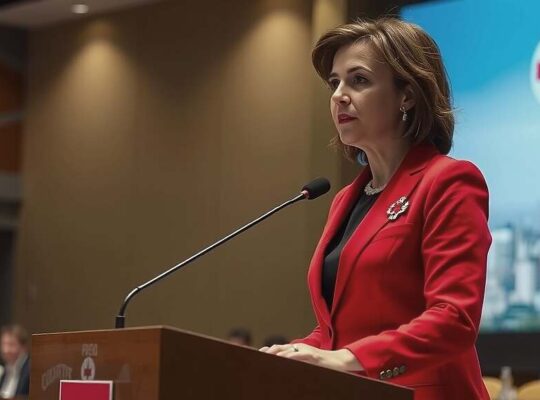
In addition to pressuring DB chief Evelyn Palla, Reiß expressed support for her restructuring plan. He urged her to make fewer promises than her predecessor, Richard Lutz, and to directly intervene in the system by making incremental changes. “I see progress” he noted, “Palla is taking the effort to look at the details and to delegate responsibility downward, which is essential”.
The halving of the senior management team, as implemented by Palla, will improve the operating result and, with tighter control, increase DB’s productivity. The same logic, Reiß added, applies to long‑distance rail, which “should not face a crisis with its new trains and modern technology”.
Reiß also welcomed Palla’s decision to sever links with cargo chief Sigrid Nikutta and finance chief Karin Dohm. He said that consistency is a hallmark of good management and that only with such an approach can Palla achieve results. Reiß did not describe her method as “rigorous” but warned that inconsistency, or not acting at all, would cost the company-and taxpayers-more.
Reiß expressed frustration that Dohm was hired despite objections “from the board at the time of her appointment, everyone was aware that Ms. Dohm was the wrong person”. He said the board sought a finance leader but selected a candidate who evidently did not fit the role, convincing the supervisory board to proceed with the appointment. The result, Reiß said, is that taxpayers are paying for another costly mistake, and he expects much more debate over the issue in the future.