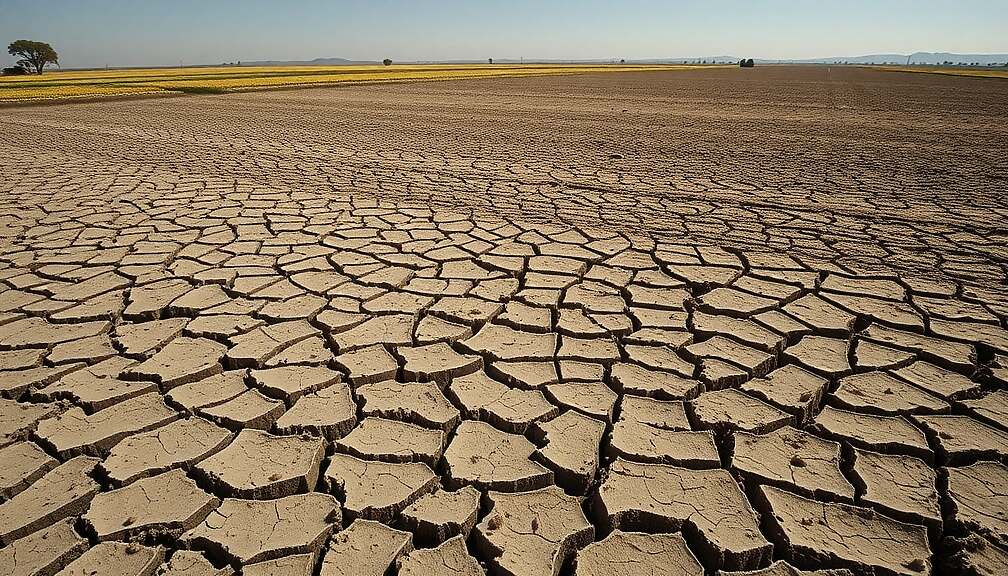
The Federal Minister of Agriculture, Alois Rainer (CSU), has publicly reacted to the recent harvest report from the German Farmers’ Association, expressing alarm over the current situation. Commenting on Tuesday, he stated that a look at the fields clearly showed the significant impact of persistent drought, noting that the pressure on agricultural farms increases with every dry day. He assured the public that he would fight at every level to ensure the agricultural sector receives the necessary support during this difficult period.
Rainer stressed that it is crucial for farming operations to remain “liquid and operationally capable.” To meet this need, they require room to maneuver, such as being able to purchase feed for their animals. He pointed out that existing instruments are already available, including the 200-million-euro liquidity aid program offered in partnership with the Agricultural Credit Bank. Furthermore, farmers can apply to postpone their social security contributions through the SVLFG. Meanwhile, he confirmed that rent obligations can be deferred via the BVVG, and installment payments on current Rentenbank loans can be suspended. Additionally, the ministry is working hard to ensure that EU fertilizer subsidies reach the farms in a timely and targeted manner, free of excessive bureaucracy.
The minister highlighted the seriousness of the crisis during a recent meeting of the Federal Cabinet. Rainer explained that cross-departmental preparation is vital. He has also briefed the EU Agriculture Commissioner on the situation observed in the cultivated fields and pastures, making it clear that Europe may need to step in during a severe emergency. He is currently speaking with the various states, noting that they possess the best local knowledge and can identify exactly where the drought is having the most intense effect. The government intends to integrate and consolidate these regional observations with the official harvest data, which will be available this month, creating the broadest possible basis for future decisions.
Fundamentally, the drought crisis demands “consistent support” for agricultural businesses, the minister asserted. This support applies to direct payments, which are vital because they stabilize income regardless of yield or market price. Accordingly, for the 2027 direct payments, the government plans to maximize available flexibility. This move will raise direct payments to farms from approximately 4.1 billion euros in 2026 to 4.9 billion euros in 2027. He specified that they will forego the originally planned legislative process for setting 2027 direct payments, allowing the businesses essential planning certainty and stability when crops fail and costs rise simultaneously.
However, the Federal Ministry of Agriculture also clarified that, according to the constitutional division of powers, the states are responsible for implementing aid measures during extreme weather events such as drought. For the federal government to get involved, the damage event must first be officially classified as an “event of national significance,” based on a comprehensive evaluation of the damages and their economic consequences.