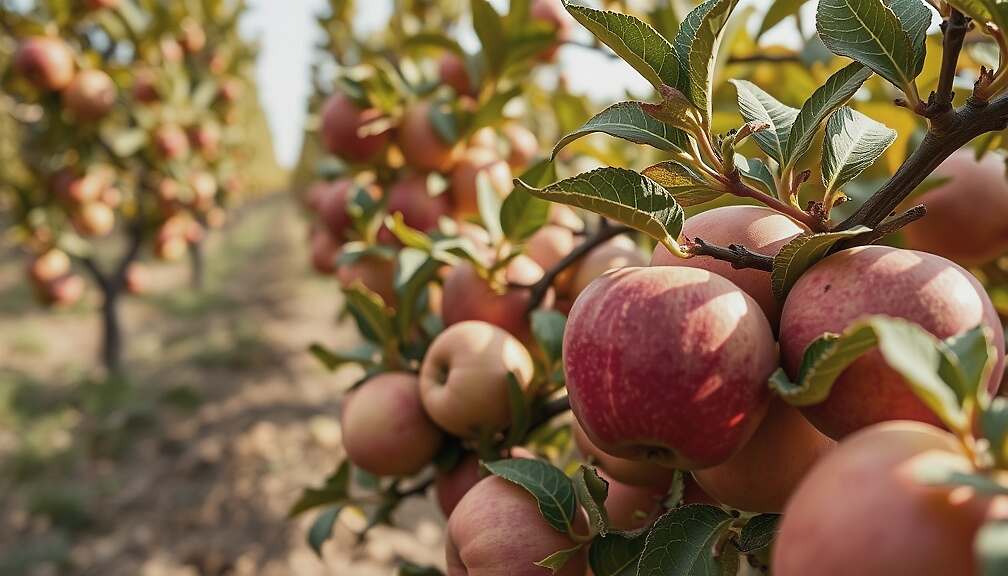
Germany’s apple growers are celebrating a record harvest in 2025, a development that highlights the resilience of the agricultural sector but also raises questions about market dynamics and potential for waste. According to preliminary figures released by Destatis, the Federal Statistical Office, total apple production reached 1.138 million tonnes, significantly exceeding forecasts made just months prior. This represents a 30.5% increase compared to the weaker output of 2024 and sits 17.2% above the ten-year average.
The surge in apple yields is particularly pronounced in key agricultural states like Lower Saxony and Hamburg, renowned for the “Old Country” (Altes Land) apple-growing region and Baden-Württemberg. These three states account for over 65% of Germany’s apple cultivation area, producing nearly three-quarters of the country’s total apple output. While a boon for growers, the sheer volume has prompted concerns among agricultural economists regarding potential oversupply and its impact on market prices.
A substantial majority of the harvest – 75.5% or 859,000 tonnes – is destined for the fresh fruit market. However, this abundance could disproportionately affect smaller growers lacking the resources to effectively manage or market their surplus. Compounding this, a relatively small percentage – 0.8% – of the apple harvest was deemed unmarketable due to storage or processing losses, a figure that may be inflated by the sheer scale of the production.
The news coincides with a successful plum and sloe harvest, totaling 51,300 tonnes, also surpassing earlier projections. Rheinland-Pfalz experienced a particularly strong performance, with production up 40.5% compared to the ten-year average. The success of both apple and plum harvests contribute to a total of 1.284 million tonnes of fruit output, with apples dominating at 88.6% of the total.
However, the government has yet to comment on potential subsidies or market intervention strategies to mitigate risks of price depression for growers burdened by excessive supply. The current situation underscores the vulnerability of the agricultural sector to fluctuating weather patterns and the need for robust, sustainable market planning – a conversation likely to be reignited within parliament in the coming weeks. Furthermore, the relatively high rate of “unmarketable” apples and plums emphasizes the necessity of improving post-harvest infrastructure and processing techniques to minimize waste and maximize resource utilization.