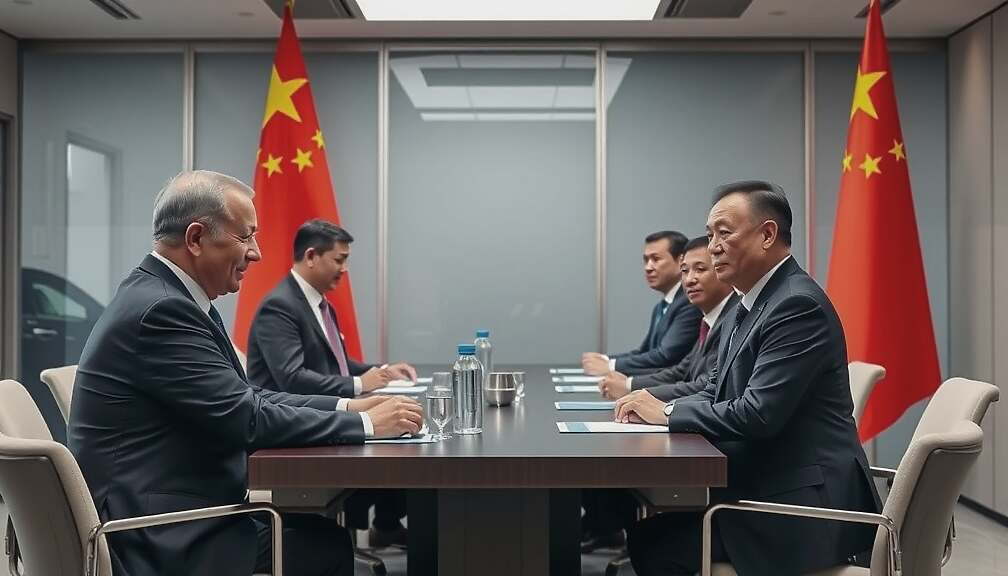
German automakers expect Chancellor Friedrich Merz (CDU) to push for market liberalisation during his upcoming trip to China. Hildegard Müller, president of the VDA and quoted by “Welt am Sonntag”, said that the German side must detail the specific ways in which China distorts competition. She added that the goal of the talks should be a mutual opening of markets, not a reciprocal isolation; China has a “bring‑forward” obligation as well.
Sales for German brands in China have fallen sharply in recent months. The decline has been driven, in addition to heavily subsidised new local electric‑vehicle marques, by a new luxury tax on high‑priced cars that disproportionately affects German manufacturers. Müller said German automakers also expect China to make constructive proposals to reduce these distortions.
Müller cautioned against provoking a backlash by introducing new EU rules that favour European cars in public procurement, offer purchase incentives or impose duties. France’s auto industry-of which French manufacturers have a much smaller presence in China than the Germans-currently calls for such measures that could even lead to market isolation. “Even if China is now asked to make concessions, Europe must carefully weigh its actions and the potential counter‑measures from China, which could threaten local industry” Müller warned.
Europe must not shut its automotive market. It should remain open to Chinese companies to bring investments and value‑adding activities back to Europe. The lobby also urges the EU to put forward proposals that stabilise trade relations.
Accordingly, the EU should avoid steps that could provoke Beijing. Müller described the EU’s tariffs on Chinese electric cars as a mistake. The industry also views the recent tightening of China’s luxury tax, introduced three‑quarters of a year ago, as a reaction to the EU’s 2024 policy move.