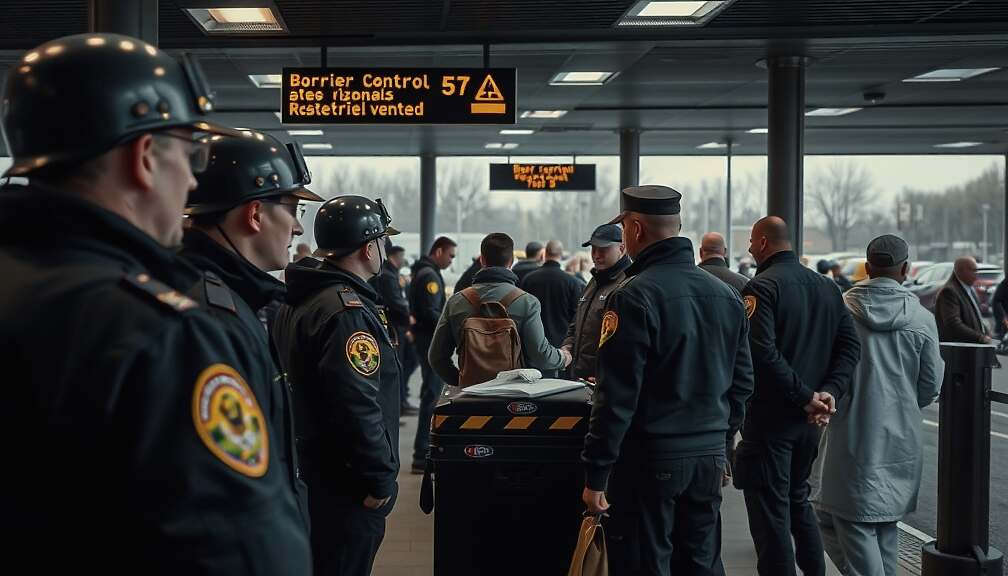
According to a response from the federal government to an inquiry posed by the Green Party, the Federal Police turned back a total of 9,097 people at German borders in the first quarter of this year.
These figures, which the “Tagesspiegel” reports, indicate that 7,176 people were rejected during the temporary border controls. Most of these refusals occurred at the border with France (1,690), followed by Austria (1,397), and Poland (1,250). The government has clarified that these counts are preliminary. For comparison, the total number of people turned back in the past year was 42,215, with 9,273 being rejected in the first quarter alone.
Marking heavy criticism of the government’s actions was Marcel Emmerich, the Green Party’s domestic policy spokesperson. Emmerich stated to the newspaper that both stationary border controls and the outright rejection of travelers are “neither effective nor lawful”. He asserted that the policies harm Europe and strain the economy, criticizing that they divert thousands of police resources to border checkpoints. He warned that, especially during an economic crisis, the controls particularly hurt logistics companies and supply chains, thereby jeopardizing the smooth flow of goods.
Emmerich further argued that the government exaggerated its security benefits while downplaying the real costs. He claimed that police forces were missing from key locations such as train stations, airports, and areas combating serious crime. While acknowledging that no court has upheld the current policy, he pointed to numerous previous legal decisions that had deemed these measures unlawful.
Calling the continued adherence to this policy “reality denial” Emmerich labelled the controls “symbol politics” that cost millions without solving any actual problems. He demanded that the border blockades be ended immediately and that the illegal refusals of people must cease.