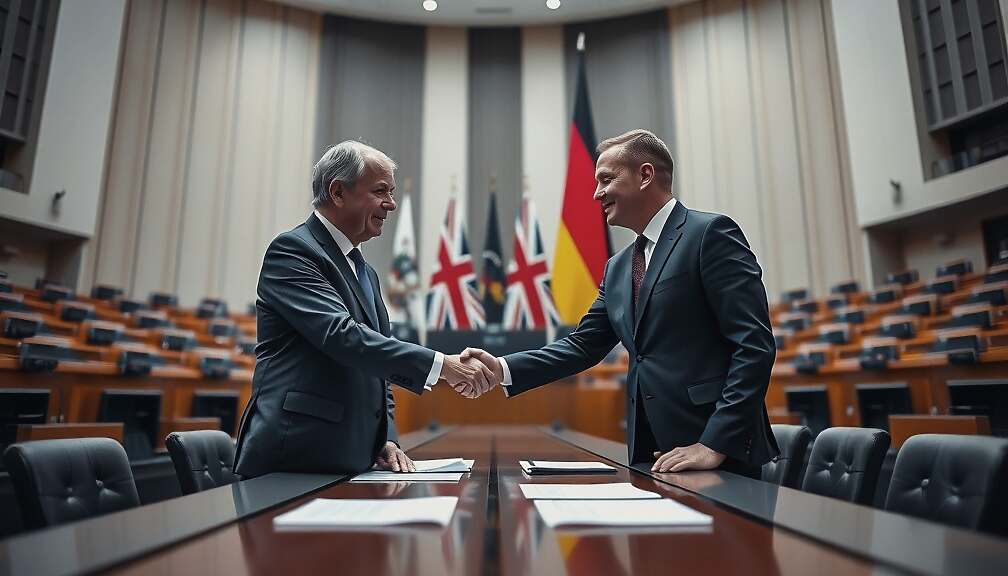
The German Bundestag approved the “friendship treaty” between Germany and the United Kingdom, a pact that the leaders of both countries-Prime Minister Keir Starmer and Chancellor Friedrich Merz-signed last summer. The draft bill, which was passed on Thursday with votes from the coalition and the Greens, was rejected by the AfD and left untouched by the Left party.
Spanning 27 pages, the document calls for deeper cooperation in a range of areas, from defense and trade to migration. It particularly lays out an “enhanced exchange” on strategic security matters, covering deterrence and defense, nuclear issues, arms control, non‑proliferation, chemical, biological, radiological and nuclear threats, space safety, counter‑terrorism, and the broader international security architecture.
The treaty also contains a support clause that extends beyond existing NATO agreements. Both signatories affirm their close alliance and pledge a “deep commitment to mutual defense” agreeing to assist one another in the event of an armed attack on either party, even through military means. The text states that it is based on the belief that there is no “strategic threat” to one party that would not simultaneously constitute a “strategic threat” to the other.