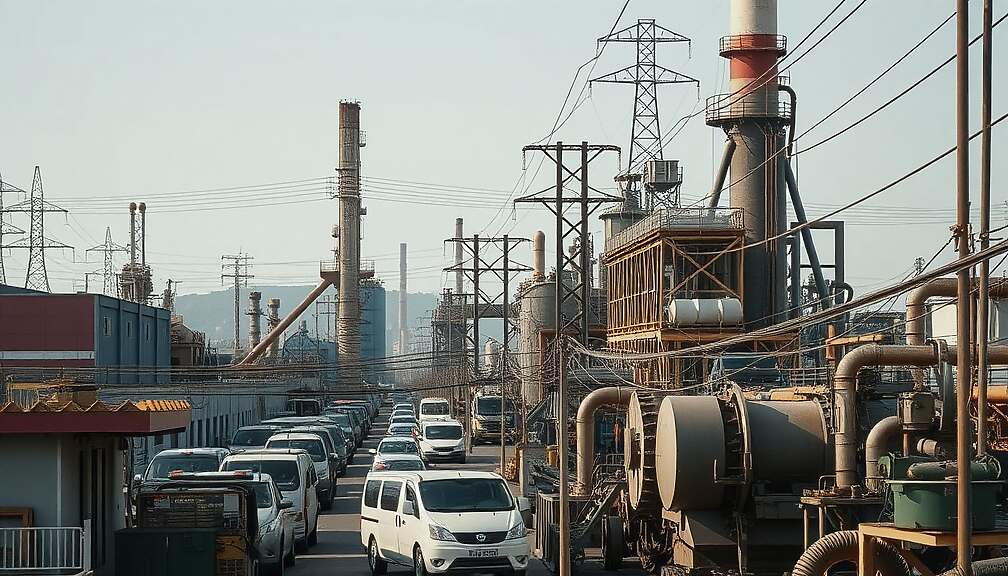
The Christian Democratic Union’s (CDU) economic council is advocating for a significantly accelerated adoption of artificial intelligence (AI) across German industry and the energy sector, outlining a potentially transformative shift with implications for both national competitiveness and climate goals. According to Wolfgang Steiger, Secretary-General of the CDU’s economic council, AI-driven automation, predictive maintenance and process optimization hold the promise of substantial gains, potentially reducing production lead times by up to 30% and manual labor requirements by as much as 40%.
The council’s recently released analysis emphasizes AI’s capacity to bolster the resilience and efficiency of energy grids, crucially enhancing the integration of renewable resources. Specifically, AI-powered forecasting could dramatically improve the accuracy of wind and solar energy predictions, a factor deemed vital for maintaining grid stability and maximizing the effectiveness of renewable energy infrastructure. The prospect of achieving national climate targets through efficiency improvements and emissions reductions is also presented as a key driver for broader AI implementation.
However, the council highlights significant structural impediments currently hindering widespread adoption. A critical shortage of skilled workers with the necessary AI competencies is identified as a primary bottleneck, alongside a general lack of expertise within many sectors. This underscores a growing concern that Germany risks falling behind international competitors if these skill gaps are not addressed swiftly.
Consequently, the CDU’s economic council is calling on policymakers to prioritize investment in comprehensive education and training programs focused on developing AI skills. This proposal moves beyond simple upskilling, suggesting a strategic overhaul of vocational training and higher education curricula to cultivate a workforce capable of leveraging AI’s potential. The implicit criticism is that current governmental efforts are insufficient to meet the rapidly evolving needs of the German economy and its ambitious climate goals, raising questions about the long-term sustainability of Germany’s industrial leadership. The call signals a growing pressure on the government to not only encourage AI adoption, but to actively engineer the workforce capable of driving it.