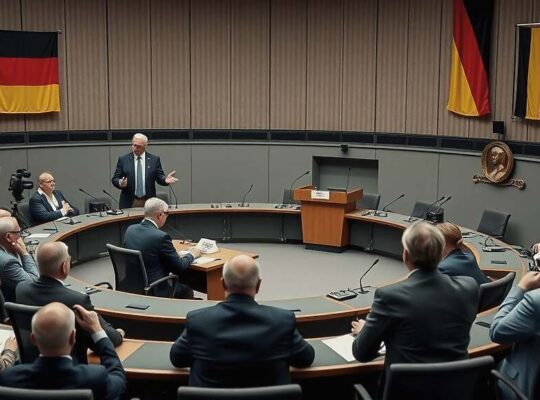
The synodal leadership of the Evangelical Church in Germany (EKD) has issued a firm rebuke of the Alternative for Germany (AfD) party, asserting that its members are fundamentally unsuitable for positions of religious authority due to what it deems “dehumanizing” stances. Anna-Nicole Heinrich, Preses of the EKD synode, stated in an interview with “Welt am Sonntag” that individuals holding such views are incompatible with the core principles of the church, particularly regarding its diaconal work and commitment to human dignity. She emphasized that this assessment applies specifically to individuals serving in leadership roles, essential for the church’s operations.
Heinrich dismissed concerns that this stance might alienate potential AfD supporters, insisting that the church remains dedicated to maintaining open communication and dialogue with all members of the community. This clear distancing from the AfD reflects a growing trend of German religious institutions publicly condemning right-wing extremist ideologies, a move increasingly viewed as a necessary political assertion.
Beyond its political commentary, the EKD is also facing scrutiny regarding its newly adopted peace paper, which acknowledges the limitations of purely pacifist approaches to international conflict. Heinrich clarified that the paper does not endorse a naive idealism, but rather a more pragmatic understanding of peacebuilding in a violent world. The document controversially suggests that “violence to preserve the law” might be a necessary last resort in pursuit of a just peace, sparking debate within and outside the church. This departure from traditional pacifist doctrine has been interpreted by some as a shift toward a more interventionist stance on international affairs.
When asked about the potential for deploying German Federal Armed Forces (Bundeswehr) peacekeeping troops to Ukraine, Heinrich expressed a cautious approach. While refusing to provide definitive answers, she acknowledged that the peace paper could offer guidance for expert discussions and affirmed the church’s commitment to providing support to soldiers through its military chaplaincy. This conditional support underscores the ongoing internal deliberations within the EKD regarding Germany’s role in the escalating geopolitical tensions surrounding Ukraine, balancing pacifist ideals with the realities of international security. The EKD’s willingness to subject its positions to a “reality check” as Heinrich described it, indicates an ongoing effort to reconcile its religious principles with the complexities of the modern political landscape.