The coalition’s policy makers are split over whether Germany should participate in a multinational naval mission in the Strait of Hormuz.
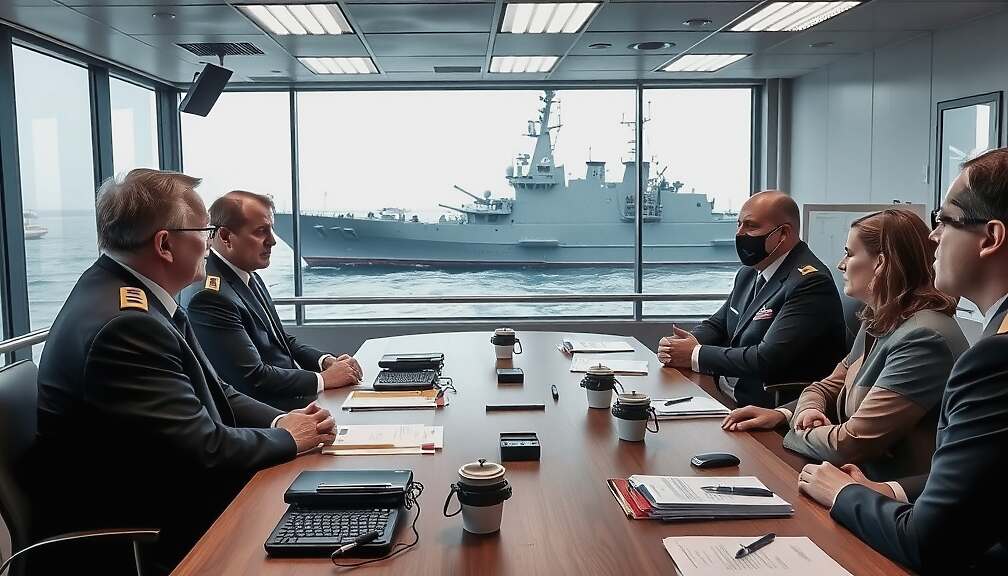
Defense minister of the CDU, Bastian Ernst, said he would be open to a German contribution in the international context. He explained that the Houthi militia in Yemen had stopped its attacks on civilian shipping in the Red Sea, which had lessened the importance of the EU mission Aspides that protects those shipping lanes. “That could change again if the Houthis, in solidarity with Iran, resume attacks on maritime traffic” Ernst told “Die Welt”. Germany must be ready for that possibility, he added, and should plan and coordinate contributions with its partners. “In that case we could once again ramp up Germany’s engagement in the Aspides mission to safeguard freedom of navigation”. For that purpose the Bundestag has authorized a mandate capped at 350 soldiers, Ernst said, “which would be enough to deploy a frigate or a long‑range reconnaissance vessel”.
In contrast, SPD foreign policy spokesperson Adis Ahmetovic rejected any participation. “For the SPD it is clear: we are not going to take part in the Iran war” Ahmetovic told “Die Welt”. “The attack is not justified under international law, and the associated risks to regional stability and to European security run counter to German interests”. He urged that the federal government should make it clear that there are no contradictions between principles, interests, and the continued use of international law as the foundation for German foreign policy.
The SPD’s stance was reinforced by the current developments in the Iran war. Ahmetovic noted the increasing uncertainty caused by contradictory signals from the Trump administration and the Israeli government. “Germany is well advised to focus its efforts on diplomatic initiatives in cooperation with the EU, Gulf states and Turkey, to end the war as quickly as possible” he said. Failure to do so could harm the entire region, while the negative spill‑over effects on the global economy would grow daily.