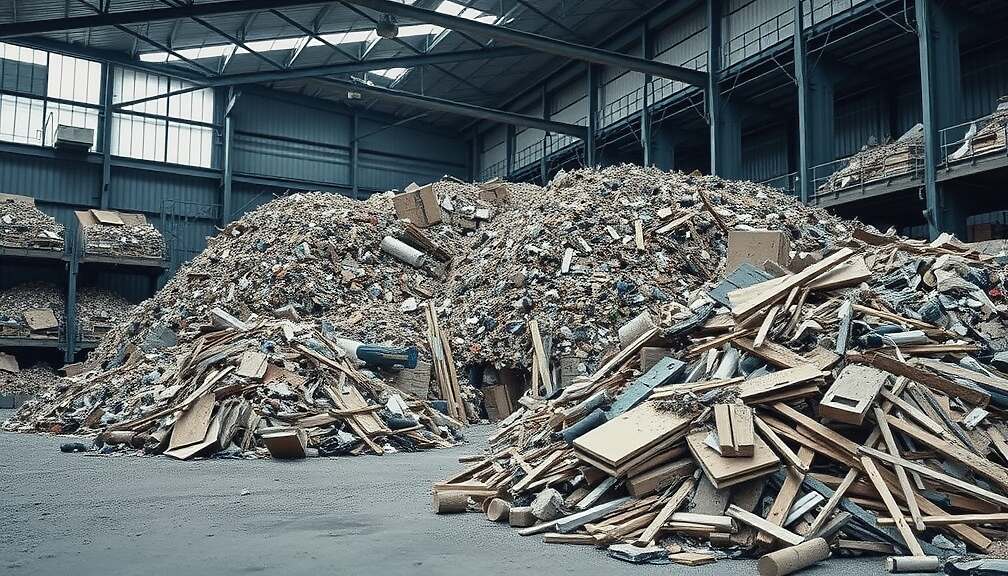
Throughout 2024, nearly 76 million tons of construction and demolition waste were processed at facilities for preparing construction debris and asphalt mixes in Germany. According to data released by the Federal Statistical Office (Destatis) on a Tuesday, this represents a decline of 13.2 percent, or 11.6 million tons, when compared to the previous reporting year of 2022.
The largest portion of the received waste was construction debris, which includes materials like concrete, bricks, tiles, and ceramics. This category accounted for 48.0 percent of the total volume, amounting to 36.4 million tons. This segment also saw a decrease of 19.3 percent compared to 2022, equating to 8.7 million tons less. Additionally, road surfacing material made up 21.0 percent of the waste (15.9 million tons), while excavated soil constituted 16.7 percent (12.6 million tons), covering general soil, stones, and excavated materials, including track ballast.
Of the total construction and demolition waste, 81.6 percent (61.9 million tons) was processed at dedicated construction debris preparation facilities. The remaining 18.4 percent (13.9 million tons) was utilized at asphalt mixing plants. These preparation facilities process mineral construction waste, such as concrete, bricks, and ceramics, using various methods so that they can subsequently be used, for instance, as recycled construction materials. These same facilities also pre-treat construction waste that is then sent to asphalt mixing plants for processing.
In 2024, 9.7 million tons of such pre-treated construction waste were incorporated into asphalt mixing plants. These plants combine different materials-such as sand, gravel, bitumen, and sometimes additives-to produce asphalt mixes with required characteristics. These resulting mixtures are then used on construction sites for building or repairing roads, walkways, or other asphalt surfaces.