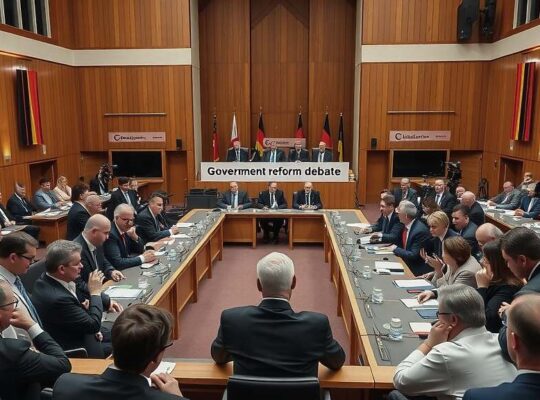
A growing chorus of concern regarding absenteeism in the German workforce has prompted the head of the Confederation of German Employers’ Associations (BDA), Rainer Dulger, to advocate for a radical overhaul of existing sickness benefit policies. Dulger’s proposals, articulated in an interview with “Welt”, represent a significant push from employer groups to curb what they perceive as an escalating crisis impacting productivity and straining the national economy.
The core of Dulger’s argument rests on the assertion that the current system, which provides full wage continuation for up to six weeks per illness, incentivizes absenteeism, particularly for minor ailments. Drawing comparisons to international models, Dulger contends that more generous benefit provisions correlate with elevated rates of employee absences. This perspective is fueling a debate about the long-term sustainability of the current system and raises questions about potential unintended consequences.
A central and arguably controversial, tenet of the BDA’s reform agenda is the complete abolition of telephone prescriptions. Initially introduced as a pandemic-era measure, these remote consultations are now being branded as a conduit for abuse. Dulger argues that video consultations offer a more modern and secure alternative, raising concerns that the current process is vulnerable to manipulation. This stance is likely to face resistance from medical professionals and patient advocacy groups who highlight the accessibility benefits of telephone consultations, particularly for individuals in rural areas or with mobility challenges.
Beyond simply restricting benefits, Dulger’s proposals include capping the total duration of sickness benefit payouts to a maximum of six weeks per year, rather than per individual instance of illness. This shift would significantly limit the potential for employees to accumulate extended periods of paid absence throughout the year. Further proposed changes target overtime and night shift bonuses, arguing that these should not be paid to employees on sick leave – a position that, while seemingly logical, could be perceived as further penalizing vulnerable workers. The BDA also seeks to empower the Medical Services of Health Insurance Funds (Medizinischer Dienst der Krankenkassen) to more frequently and swiftly assess employee sick leave, moving beyond the current system of primarily reactive examinations.
The impetus for this aggressive reform push stems from a significant and sustained rise in absenteeism since 2022. Preliminary estimates from the Institute of German Economics (IW), a pro-business think tank, indicate that German companies are currently absorbing approximately €82 billion in costs associated with sickness benefit payments annually. These direct costs are compounded by substantial production losses and forfeited value creation, with a recent study from the Federal Institute for Occupational Safety and Health estimating lost productivity due to absenteeism at a staggering €134 billion in 2024 alone. The average employee registered approximately 20.8 sick days in 2024, a figure that has triggered alarm bells within the business community.
While employers frame these reforms as essential for bolstering Germany’s economic competitiveness, critics warn that such measures risk undermining employee well-being and placing undue pressure on a workforce already grappling with increasing stress levels. The proposals represent a politically charged moment and the extent to which Dulger’s vision will be implemented remains to be seen, but it undoubtedly highlights a growing tension between employer demands for productivity and concerns surrounding worker health and rights.