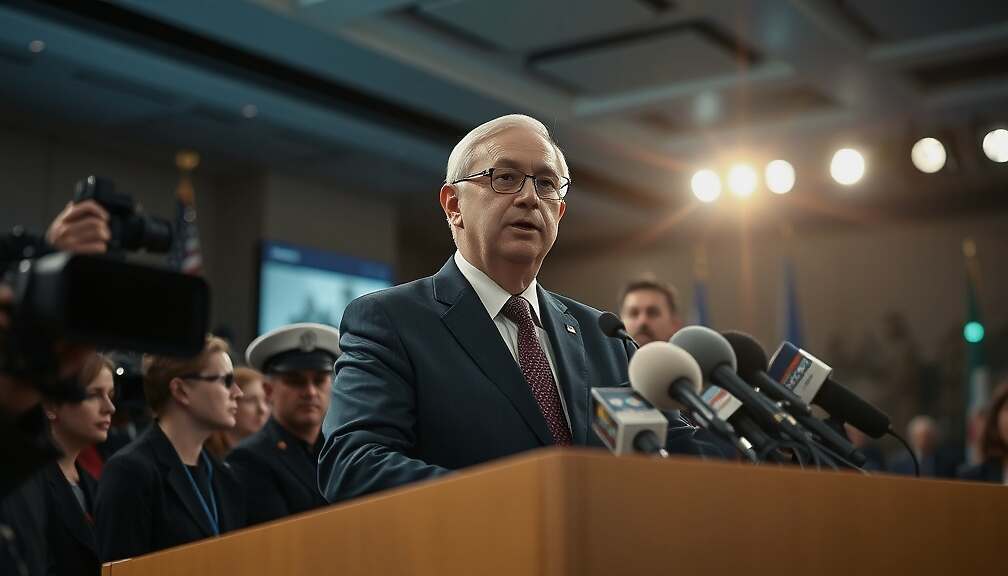
Federal Environment Minister Carsten Schneider (SPD) recently defended the planned budget cuts within his ministry against criticism. Looking toward the World Climate Conference in Antalya, he told Deutschlandfunk that Germany stands as “the world’s most stable partner” on climate issues. However, he also acknowledged that the draft federal budget for 2027 mandates reduced financial support for developing nations in achieving their climate goals.
To compensate for these aid reductions, the minister explained that at the Biodiversity Conference, he successfully secured “private funds” and sought out “alliances,” notably with various foundations. Despite these efforts, the SPD politician admitted that the full budgetary funds are necessary to uphold their international responsibility. He stressed that failing to provide a sustainable existence for people in other countries threatened by climate change would inevitably lead to migration, an outcome that is “not what Germany actually wants.”
Turning to domestic environmental policy, Schneider affirmed that Germany has decided to “phase out the use of oil and gas.” He added that this initiative positions Germany as “the third country in the world” to actively pursue this change while simultaneously driving the expansion of renewable energy. He remains optimistic that Germany’s electricity consumption from renewable sources will reach 80 percent by 2030, calling renewable energy “the cheapest and also the cleanest,” a path the federal government is pursuing.
These domestic efforts take place against a backdrop of escalating global climate concern. The 31st UN World Climate Conference begins this Monday in Antalya, Turkey. The UNEP Environmental Programme recently issued a warning that global warming could rise to between 2.6 and 2.8 degrees by the end of the century, a level that would substantially miss the 1.5-degree target set by the Paris Climate Agreement. The Turkish COP presidency aims, among other goals, to boost the share of renewable energy in global electricity consumption to 35 percent by 2035.